
Reviewed · POLITICAL & MURAL TOURS
Belfast Troubles Tour: Walls and Bridges
Belfast’s past is written across its streets. On this walking tour, you move from grand City Hall to mural-covered Divis Street and the tall Peace Walls, while a Belfast guide explains how politics, religion, industry, music, and daily life shaped the city. Arthur McGee is one guide associated with the tour, and his personal experience gives the subject a human voice.
I like two things in particular. First, you walk through both sides of Belfast’s divided story instead of seeing the Peace Walls from a bus window. Second, the tour does not leave you in the darkest years. It connects the Troubles with Belfast’s older civic life and its effort to build a more peaceful future.
The main consideration is the subject itself. This is not a light sightseeing stroll: it includes graphic material and difficult accounts of violence. You should also expect a fair amount of walking over nearly three hours, so good shoes and an open mind matter.
Key points to know before booking
- Personal local storytelling: Guides such as Arthur McGee and Steve use lived experience, humor, and detailed explanations to make a complex subject easier to follow.
- A walk across divided Belfast: The route reaches the International Mural Wall and Peace Wall area, with time to look closely and take photographs.
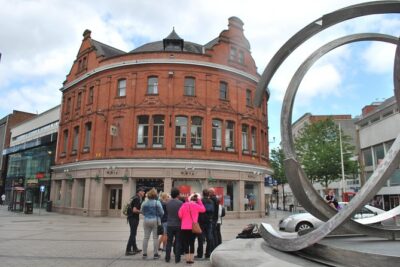
- More than a Troubles tour: City Hall, the Albert Clock, Belfast Entries, Cathedral Quarter, the Big Fish, and First Presbyterian Church broaden the picture.
- Serious but not one-note: The tour addresses murder, injury, discrimination, and political conflict, then closes with ideas of understanding and hope.
- Private format with a small maximum: The experience is sold as a private tour and allows no more than 16 people, which supports questions and direct contact with the guide.
- Useful practical details: It lasts about 2 hours 40 minutes to 3 hours, costs $33.29 per person, is in English, and begins at City Hall.
Why this Belfast walk is worth your time
Many city tours give you a quick photograph of the Peace Wall, a few dates, and a simplified story. This one asks you to slow down. You walk through the city center, reach areas connected with the conflict, and hear how political identity affected ordinary streets and families.
I like this approach because Belfast is easy to misunderstand from a distance. The word Troubles covers decades of violence, but it can hide the daily reality behind the label. The guide explains the political and religious divide, but also brings in economics, industry, music, social life, and personal memory.
The tone is carefully balanced. The tour does not pretend the conflict was simple, and it does not ask you to adopt one political view. Arthur is often praised for being direct, funny, and willing to discuss difficult questions. Steve is also mentioned as a strong guide who shares personal stories and explains the period clearly.
Humor has a place here, but it does not erase the pain. It gives you a way to keep listening through material that can be hard to absorb. The best part of the experience is the movement between seriousness and ordinary human detail.
More of the murals and the peace walls in Belfast:
- A History of Terror – Belfast City Centre Walking Tour
★ 5.0 · 2,883 reviews - Belfast’s Political Mural Taxi Tour
★ 5.0 · 1,180 reviews - Famous 1.5 hour Belfast Murals Tour
★ 5.0 · 477 reviews
City Hall gives you the wider frame
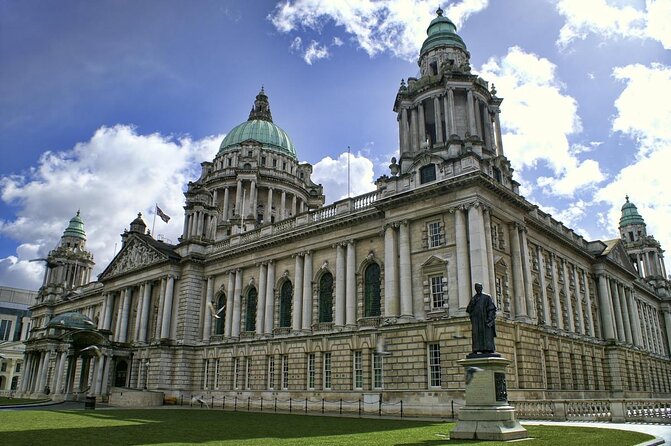
The tour begins at Belfast City Hall, a useful starting point because it introduces the city before the focus narrows to the Troubles. The building’s large dome rises 174 feet, and its interior uses several kinds of marble, including Italian marble and Cipollino marble from Greece. Stained-glass windows add to the grand effect.
You get about 10 minutes here, with free admission. That is enough time for the guide to explain why the building carries such civic weight and to help you read Belfast as a city shaped by industry, government, and public ambition.
From here, the route reaches the Big Fish, a modern sculpture by Dan George. Its Celtic design connects with Belfast’s engineering, industry, and communities. It is a quick stop, but it helps remind you that the city is not only a place of old divisions. Belfast also has a modern public face.
Murals and the Peace Wall make the conflict physical
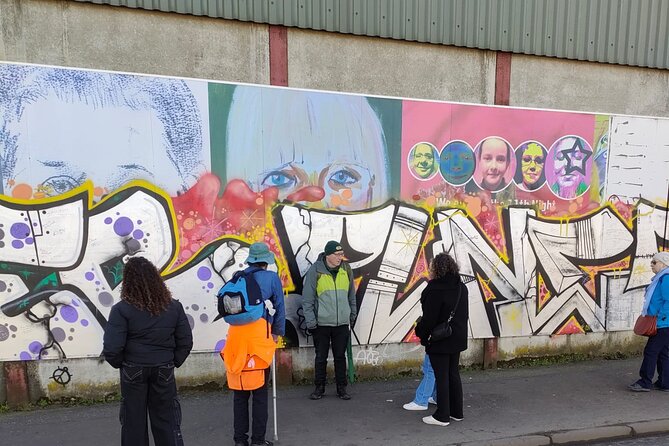
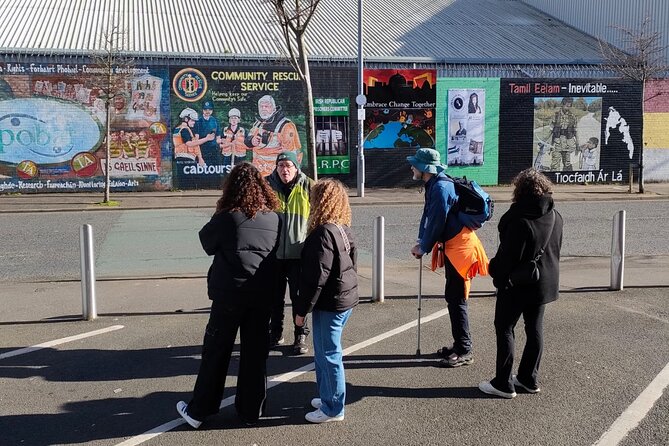
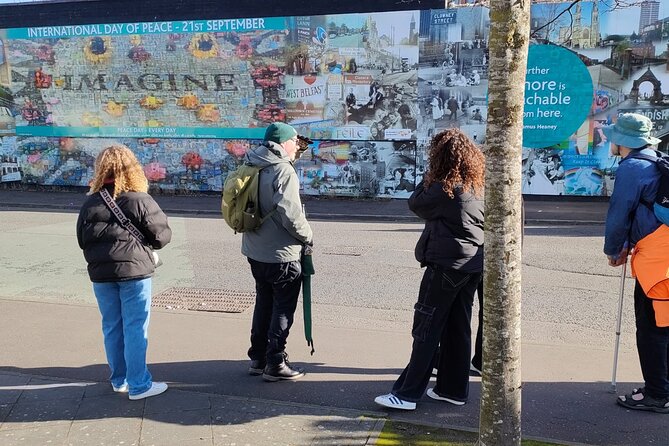
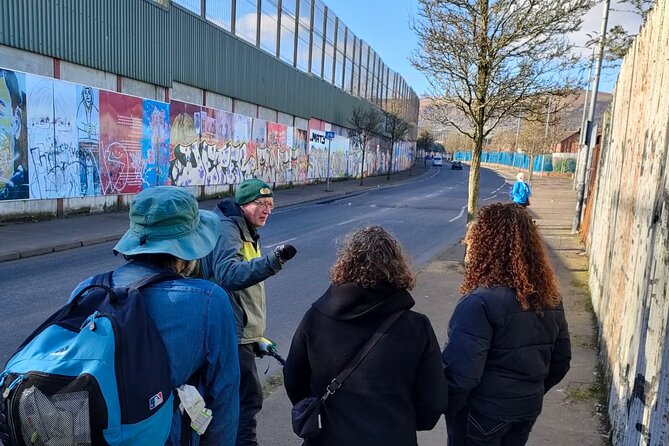
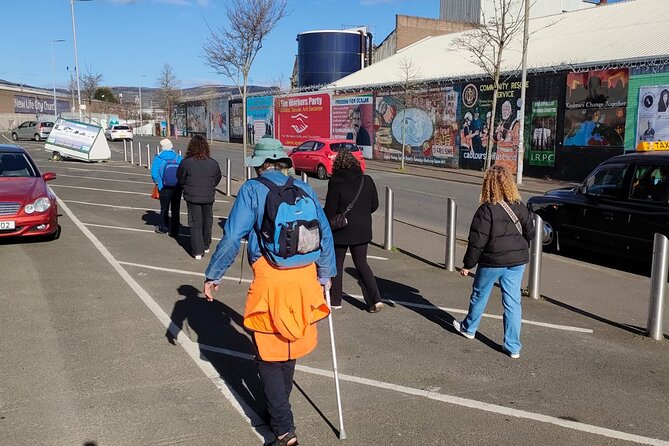
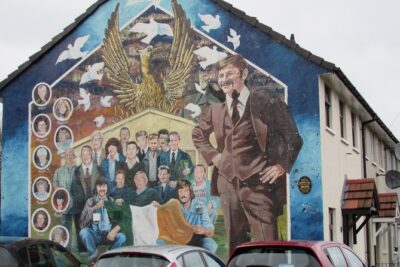
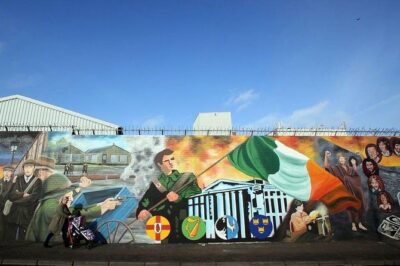
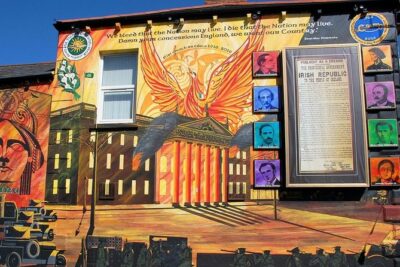
The International Mural Wall on Divis Street is one of the key stops. Murals in this area function as public messages, political statements, memorials, and signs of identity. A guide can explain why these images matter instead of treating them as colorful street decoration.
You have about 10 minutes here. That gives you time to study the artwork and ask questions. Bring your attention to the details. The point is not simply to collect photographs, but to understand how walls and images became part of Belfast’s political language.
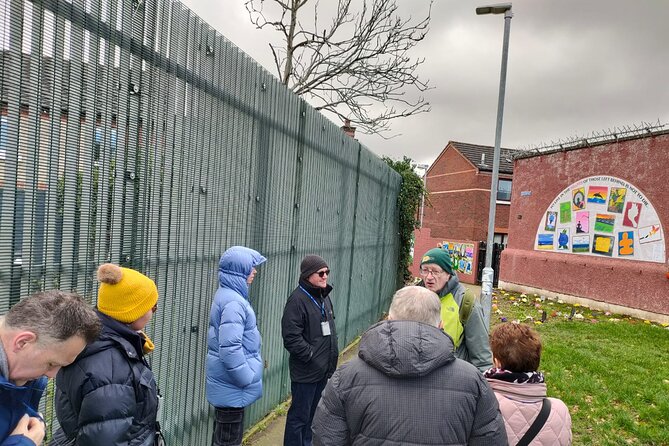
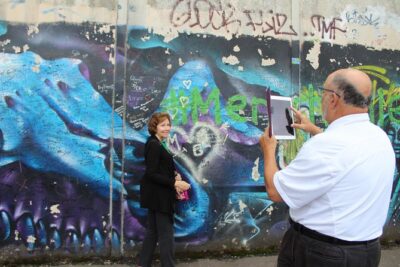
At the Peace Wall, the scale of the division becomes harder to ignore. The walls reach about 16 meters high and have mesh along the top, originally intended to stop petrol bombs. You get around 15 minutes to examine the structure and take photographs while the guide explains its purpose and continuing meaning.
This is one of the tour’s most valuable sections. A bus can show you a barrier, but walking beside it lets you consider what such a structure means for people living nearby. The wall is both a physical object and a reminder of fear, separation, and the long work required to build trust.
The stop can also feel emotionally heavy. You are looking at places connected to real violence, not a preserved battlefield. Listen closely, but give yourself time to process what you hear.
The Albert Clock and Belfast’s older identity
The Albert Memorial Clock gives the route a change of pace. This 113-foot clock tower leans about four feet from the perpendicular, earning it a comparison with other famous leaning towers. It also marks the area around which Belfast was established.
You get about five minutes here. The tower includes a statue of Prince Albert and has a connection to the film noir Odd Man Out, which starred James Mason. That detail gives the stop a link to cinema as well as local history.
The Albert Clock matters because it takes you beyond the Troubles. Belfast did not begin in the late twentieth century, and the city’s identity cannot be reduced to conflict. The tour keeps returning to that larger picture.
Same city, a different sort of day out:
- Titanic Belfast Entrance Ticket: Titanic Visitor Experience Including SS Nomadic
★ 4.5 · 3,698 reviews - Cab Tours Belfast Famous Black Taxi Tours
★ 5.0 · 3,633 reviews - Game of Thrones and Giant’s Causeway Full-Day Tour from Belfast
★ 5.0 · 2,291 reviews - Private Black Taxi Belfast City Tour
★ 5.0 · 2,188 reviews
Cathedral Quarter and Belfast Entries show another city
The Cathedral Quarter offers a look at the city’s newer social life. You walk among colorful murals, pubs, restaurants, cobbled streets, and old passageways. The area also has links to major rock events, adding music to the tour’s mix of politics and architecture.
The word new needs some care here. The quarter has been reshaped into a popular part of Belfast, but its cobbles and narrow spaces still point back to older city life. You get about 10 minutes, enough for the guide to connect the quarter with the city’s changing identity.
The Belfast Entries are even more atmospheric. These historic passageways are easy to miss if you do not know where to look. The route winds through them, past places linked with revolution, intrigue, and pubs.
I like this part because it rewards walking. You are not simply moving between famous monuments. You are being shown the small routes that hold the texture of the old city. The entries also provide a useful contrast to the massive Peace Wall. One part of Belfast is defined by a huge barrier; another is revealed through narrow lanes.
First Presbyterian Church adds needed complexity
The final major stop is First Presbyterian Church on Rosemary Street. Dating from 1783, it offers a quiet interior and a direct challenge to the idea that Belfast’s history can be reduced to a simple religious split.
The church has an elliptical shape that impressed John Wesley, who preached from its pulpit. Its members took important positions in support of civil and religious freedoms. You get around 10 minutes to look around and take photographs.
This stop is especially useful after the Peace Wall. It shows that religious and political life in Ireland has never fitted neatly into two boxes. The church’s story complicates the usual narrative and encourages you to question easy assumptions.
The tour ends here, within sight of City Hall and only a few minutes from where you began. That makes the finish practical for continuing your day in central Belfast. It also brings the route back to the civic heart of the city after the difficult material encountered along the way.
How the guide shapes the experience
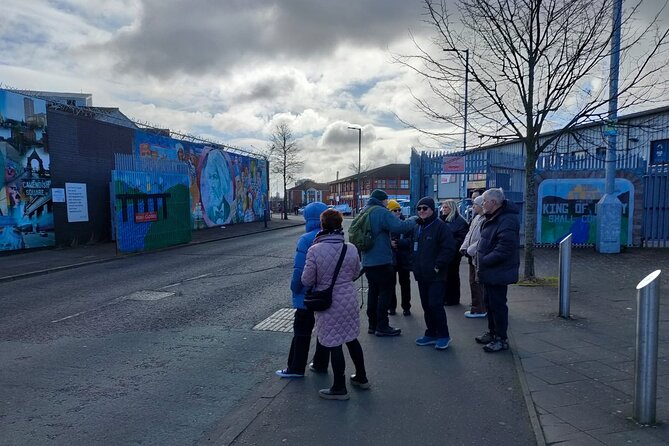
The guide is the most important part of this tour. The route itself is valuable, but the meaning comes from the explanations between stops.
Arthur McGee is repeatedly described as entertaining, direct, and deeply familiar with the subject. He has lived through the period he discusses, and his personal stories help connect major events with everyday life. He also uses humor, which keeps the three-hour walk from becoming a lecture.
Steve is another guide associated with the experience. His approach includes personal stories and clear explanations of Belfast’s past. You may be assigned either guide or another member of the guiding team, so do not book expecting a particular person unless the operator confirms it.
The guide also uses headsets when needed, helping you hear the commentary while walking. That is a small but useful detail, especially when the group is spread along a pavement or near a noisy street.
You should ask questions. The guide is prepared to discuss politics, prejudice, religion, economics, and the difficult choices made by different communities. The tour works best when you listen without assuming that the first explanation tells the whole story.
Price, pace, and group size
At $33.29 per person, the tour offers good value if you want a serious introduction to Belfast rather than a basic orientation walk. It lasts close to three hours, and the route combines major sights with detailed commentary. A private guide for that length of time costs more than a large group tour, but the chance to ask questions and hear personal context improves the value.
The private format is useful, though the maximum group size is 16 people. That is still small enough for direct contact with the guide, but you should not picture a one-to-one walk unless your booking is for only a few people.
The pace is steady rather than rushed. Stops range from about five to 15 minutes, with walking between them. You need moderate physical fitness, and comfortable shoes are a sensible choice. The tour is near public transport, starts at City Hall, and finishes on Rosemary Street at First Presbyterian Church.
The minimum age is 14. This is sensible given the graphic content and serious subject matter. It is not designed as a children’s activity.
The tour is offered in English and uses mobile tickets. Free cancellation is available up to 24 hours before the start time. If the minimum number is not reached and the experience is canceled, you are offered another date or experience, or a full refund.
Who should book this tour
I would choose this walk if you want to understand Belfast before visiting other parts of Northern Ireland. It gives you enough background to read the city’s murals, walls, flags, monuments, and neighborhoods with greater care.
It suits:
- First-time visitors who want context rather than a quick city loop
- People interested in modern European history and political conflict
- Visitors who prefer walking and conversation to a bus tour
- Anyone willing to hear painful material without looking for a simplified answer
- Travelers who want a local perspective on Belfast’s past and present
It may not suit you if you want a light introduction with only pretty buildings and photographs. It also may not be right if graphic descriptions of violence would make the experience unpleasant. The tour is serious, even when the guide uses humor.
Should you book Belfast Troubles Tour: Walls and Bridges?
Book it if you want the human story behind Belfast’s walls and murals. The route covers the main symbols of the city’s conflict, but it also includes City Hall, the Albert Clock, Cathedral Quarter, Belfast Entries, and First Presbyterian Church. That wider scope keeps the tour from presenting Belfast as a city frozen in the past.
The strongest reason to go is the guide’s role. Arthur McGee and Steve are praised for combining clear history, personal experience, humor, and an effort to remain fair. You leave with a better sense of how complicated the conflict was, why the walls exist, and why peace requires more than removing concrete barriers.
Allow close to three hours, wear good shoes, and arrive ready for difficult subjects. If that sounds like the right way to meet Belfast, this is a worthwhile use of your first day in the city.
FAQ
How long does the Belfast Troubles Tour last?
The tour lasts approximately 2 hours 40 minutes to 3 hours.
Where does the tour begin?
It begins at Belfast City Hall, Belfast BT1 5GS, United Kingdom.
Where does the tour finish?
It finishes at First Presbyterian Church on Rosemary Street, Belfast BT1 1QB, within sight of Belfast City Hall.
What sights are included?
The route includes City Hall, the Big Fish, the International Mural Wall on Divis Street, the Peace Wall, Albert Memorial Clock Tower, Cathedral Quarter, Belfast Entries, and First Presbyterian Church.
Is the tour suitable for children?
The minimum age is 14. The tour is not aimed at children and includes graphic content.
What is the cancellation policy?
You can cancel at least 24 hours before the start time for a full refund. Cancellations or changes made less than 24 hours before the start time are not accepted for a refund.
Just added in Belfast
- Belfast Black Cab Taxi Private Tour 2hr with Original Guides★ 5.0 · 10 reviews
- Luxury Party Bike Tour of Belfast City (Individual Seat)★ 4.5 · 21 reviews
- The Hippy Bike Fully Enclosed Party Bike Tour (Private Bike)★ 5.0 · 18 reviews
- Private Giants Causeway & Antrim Coast Tour★ 5.0 · 26 reviews
- Private Shore Excursion From Belfast Cruise Terminal★ 5.0 · 26 reviews
- Private Giants Causeway and Antrim Coast Tour★ 5.0 · 40 reviews
- Belfast Music and Street Art Small Group Guided Experience★ 4.5 · 62 reviews
- Private Belfast Troubles Cab Tour Adventure 2hrs Personal Guide★ 5.0 · 55 reviews
Political & Mural Tours, compared.
A History of Terror – Belfast City Centre Walking Tour
Read our review →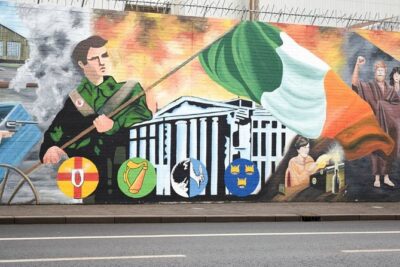
2 Hour Private Belfast Taxi Cab Tour of Troubles & Peace walls
Read our review →
2 hours Belfast Original Drivers The Troubles Black Taxi Tour
Read our review →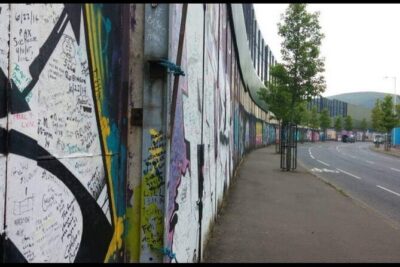
Private Political History & Murals Tour Belfast
Read our review →Browse the lists this tour appears in