
Reviewed · POLITICAL & MURAL TOURS
A History of Terror – Belfast City Centre Walking Tour
Belfast’s troubled past is not kept behind museum glass on this 2.5-hour city walk. You hear about bombings, policing, politics, and daily life while standing in the streets where those events unfolded. I like the careful attention to both British and Irish viewpoints, and I like the way guides such as James, Anne, Mylie, and Róisín add personal memories to the wider story.
The route is flat, short, and easy to follow, with headsets that help in a group of up to 25. The main drawback is the subject itself: this is often sad and emotionally heavy, and you spend more time standing and listening than walking.
Key points to know before booking
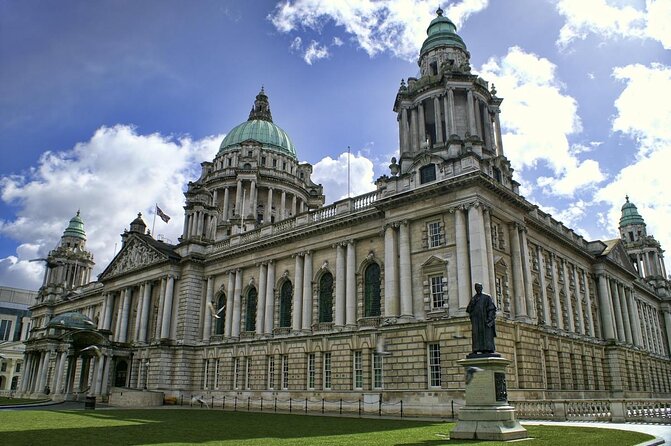
- The route covers 1.5 miles: You walk from Belfast City Hall to the Beacon of Hope, with no hills or steps.
- The history is presented in a balanced way: The tour explains the political and religious conflict without pushing you toward one side.
- Personal stories add weight: Guides including James, Anne, Mylie, Róisín, Chris, and Rorey have brought lived experience or close local insight to the subject.
- The Cathedral Quarter provides a striking contrast: Today’s bars, street art, and cultural venues sit beside stories from the darkest years of the Troubles.
- Headsets are included: They are especially useful when the group spreads out or city noise rises.
- The weather matters: The tour runs in normal poor weather, so bring a waterproof jacket and warm layers.
Why this Belfast walking tour matters
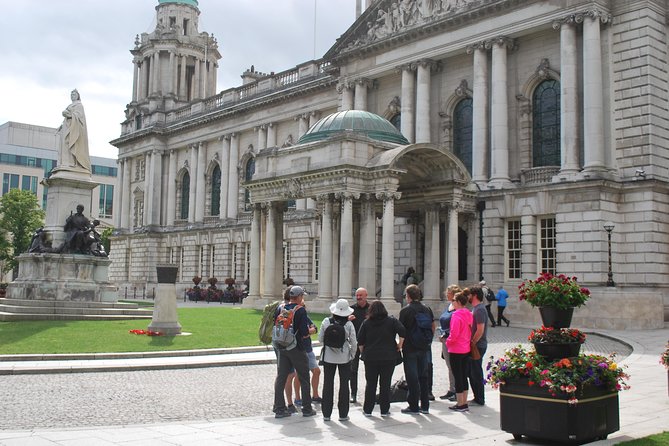
Many city walks give you dates, buildings, and a few amusing stories. This one asks you to look at ordinary streets differently. A shopping street, a police station, or a public sculpture becomes a prompt for discussing fear, identity, violence, and the difficult work of making peace.
The tour begins at Belfast City Hall at 10:30 a.m. That is a useful meeting point because it is central, easy to find, and close to public transport. The tour then moves through the city centre before ending beside the River Lagan at the Beacon of Hope.
I like the scale of the route. At about 1.5 miles, it gives you enough ground-level context without turning into an exhausting march. You can pay attention to the guide instead of worrying about keeping up. The city centre is completely flat, with no hills or steps, although comfortable shoes still make sense because you are on your feet for roughly two and a half hours.
The tour is offered in English and includes a local guide plus a headset. That equipment is more important than it may sound. One poor experience involved a speaker failing halfway through a tour, leaving some people unable to hear. The headsets normally help avoid that problem, but it is still sensible to stay fairly close to the guide.
More of the murals and the peace walls in Belfast:
- Belfast’s Political Mural Taxi Tour
★ 5.0 · 1,180 reviews - Belfast Troubles Tour: Walls and Bridges
★ 5.0 · 853 reviews - Famous 1.5 hour Belfast Murals Tour
★ 5.0 · 477 reviews
City Hall sets the historical frame
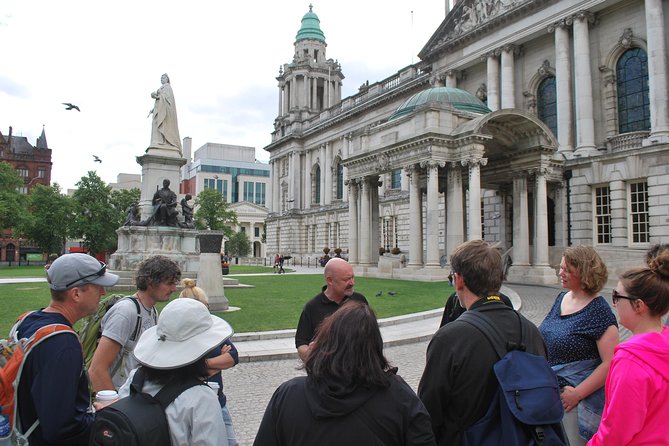
The first 20 minutes take place in the grounds of Belfast City Hall. This is not just a welcome and roll call. Your guide sets out the long relationship between Britain and Ireland, then explains how the Troubles began in the late 1960s.
That opening is valuable because the conflict cannot be understood through isolated bombings or street battles. The guide connects older political and religious divisions with the modern struggle over Northern Ireland’s status and national identity. You get the basic framework before moving to places tied to particular events.
This is also where the tour’s tone becomes clear. The strongest guides do not turn the subject into a horror show. They explain what happened, identify the human cost, and leave room for you to think. Guides such as Anne and Róisín have been praised for bringing personal experience to the story, while James is known for an engaging, often lightly humorous delivery that keeps a difficult subject accessible.
That mix matters. You are not simply memorizing a political timeline. You are beginning to understand how large decisions affected people at home, in shops, at work, and in public places.
Donegall Place reveals the danger behind a shopping street
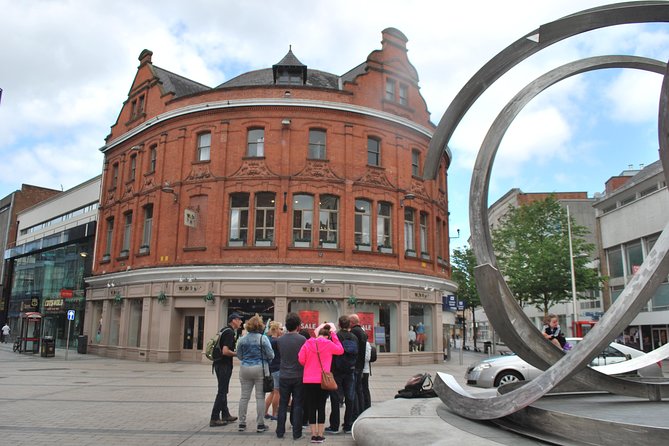
The next stop, Donegall Place, lasts about 15 minutes. Today it is a central shopping street, but your guide discusses a 1971 bomb attack on a nightclub, the deaths and injuries connected with it, and the security measures that followed.
This is one of the tour’s strongest ideas: the city’s normal appearance can hide a painful past. Shops and traffic make the area feel ordinary, yet the guide asks you to picture what the same street meant during the Troubles.
Here you learn about the introduction of the Ring of Steel, the network of security controls that changed how people entered and moved through central Belfast. The detail helps you understand that the conflict was not confined to a few isolated neighborhoods. It shaped routine activities such as shopping, going out at night, and crossing the city.
You should expect to stand while listening. There may be a dry place to sit if the weather is kind, but seating is not guaranteed. That pattern continues through much of the morning.
Castle Lane turns a pedestrian street into a memory
Castle Lane is another 15-minute stop in the pedestrian precinct. The setting feels safe and ordinary, which makes the account of life during the height of the Troubles more unsettling.
The guide explains what people faced in a part of town now associated with shopping. You also hear about an event that remains firmly fixed in local memory. The point is not simply to name an incident, but to show how violence altered the emotional map of Belfast.
A strong guide will help you imagine the practical reality: where people gathered, how quickly public spaces could become dangerous, and how memories of particular events remained long after the physical signs disappeared. The best accounts also name victims rather than reducing them to numbers.
This stop is a good example of why a walking tour can work better than a general history talk. You hear the information while looking at the place itself. The modern street does not recreate the past, but it gives the story a physical anchor.
Other walks around Belfast:
- Belfast Political Tour-Conflicting Stories Walking Tour
★ 4.5 · 459 reviews - Best of Belfast Walking Tour
★ 5.0 · 399 reviews - Belfast Eclectic Walking City Center Experience, The Marti Way
★ 5.0 · 348 reviews - Belfast Troubles Murals Street Art and Peace Wall Walking Tour
★ 5.0 · 163 reviews
The Spirit of Belfast and the start of escalation
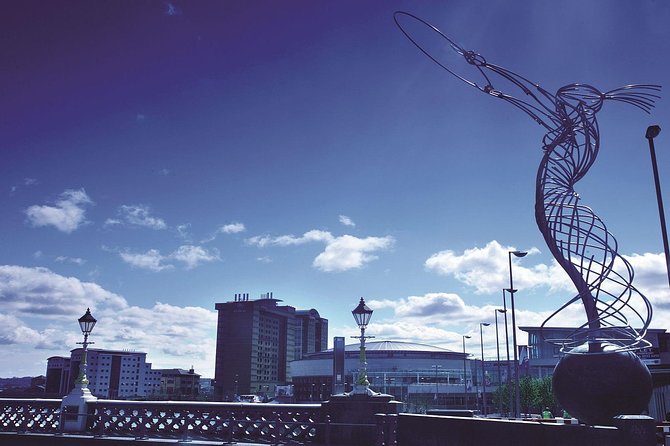
At the Spirit of Belfast, a public artwork often called the Onion Rings, the guide talks about events that began in a nearby bar in 1971. These incidents helped push Northern Ireland into a rapidly worsening cycle of violence.
The sculpture is meant to suggest resilience. That makes it a fitting place to discuss how Belfast remembers conflict while trying to present a different future. The tour does not treat public art as decoration alone. It uses the work to connect memory, survival, and urban renewal.
This stop lasts about 15 minutes. It also shows how the tour moves between broad history and individual episodes. You may hear about political decisions in one moment and the consequences of a local event in the next. That back-and-forth gives the tour its human scale.
If you want a light sightseeing walk with only occasional historical commentary, this is not the right choice. The subject is serious from the start, and the stories can be upsetting. If you want to understand how Belfast’s public spaces carry memory, this part is especially useful.
The Cathedral Quarter shows how much Belfast changed
The 20-minute walk through the Cathedral Quarter offers the clearest contrast between past and present. Today, the area is known for bars, nightlife, cultural venues, and street art. Your guide uses those modern surroundings to discuss major events from the Troubles and the first steps toward peace.
I like this section because it avoids treating Belfast as a place frozen in conflict. The city has changed, and the tour makes that change part of the story. You can look at lively lanes and murals while hearing how difficult it was to reach even a fragile peace.
The guide also explains that regeneration does not erase history. New businesses and public art can exist beside memories of violence. That tension is worth noticing. You are not being shown a polished version of Belfast that ignores the past, nor are you being asked to see the city only through tragedy.
Several guides have received especially strong praise for this stretch of the walk. Mylie has been described as an engaging storyteller who connects the city’s past with its present. Róisín has used personal memories to make the emotional reality of the period easier to grasp. The exact guide varies, but the quality of the delivery matters greatly here.
Ann Street explains policing and the peace process
At Ann Street, beside Belfast’s largest police station, the tour turns to law enforcement during the Troubles. This 15-minute stop explains how Northern Ireland was policed, how that system changed after the peace agreement, and how Brexit may affect borders and political relations.
This is one of the more useful stops for anyone who knows the conflict mainly through headlines. Policing was not a side issue. It affected trust, identity, security, and the relationship between communities and the state.
The discussion of Brexit gives the story a present-day link without pretending that old disagreements disappeared. The tour ends its political explanation by showing that peace can be real and still require care.
Your guide may use personal memories here, especially if they grew up during the Troubles. That first-hand element can be powerful, but it also means the experience varies somewhat by guide. The strongest guides combine personal stories with a calm explanation of the wider facts, rather than letting memory replace context.
The Beacon of Hope ends the walk beside the Lagan
The final 20 minutes take place at the Beacon of Hope on Oxford Street, beside the River Lagan. The public artwork celebrates resilience and regeneration, making it a fitting final stop.
Here you compare Belfast today with one of the darkest periods in its past. The guide explains how the peace was achieved, why it remains fragile, and what the future may hold. That ending gives the tour a sense of direction. You are not left with only a list of attacks and losses.
The tour finishes about a five-minute walk from City Hall, so you can easily return to the centre afterward. You may also be well placed to continue exploring the waterfront, though the tour itself does not include extra admissions or a separate attraction visit.
I appreciate the hopeful ending, but it is not sugary. The tour presents peace as an achievement that needs care, not as a neat final chapter. That is a more honest way to end a discussion of Belfast’s recent past.
Guides make the difference
The guide is the heart of this experience. Names associated with the tour include James, Mylie, Anne, Róisín, Chris, and Rorey. Several have been praised for clear delivery, personal experience, strong command of the subject, and an ability to explain both sides of the political divide.
James is often described as friendly, energetic, and good at making the two and a half hours pass quickly. Mylie brings a strong storytelling style and connects history with Belfast today. Anne has spoken about growing up during the Troubles, while Róisín has been praised for conveying the emotion of the period without becoming sensational.
The tour aims for a neutral presentation. That does not mean pretending every action or consequence was identical. It means giving you enough information about the competing identities, political aims, and human costs to form your own view.
There has been at least one poor experience caused by a failed audio system and a guide who did not adjust his delivery enough for the full group. It is a useful reminder that a group of up to 25 can be harder to manage. The included headsets are a real advantage, and you should mention it promptly if you cannot hear.
Price, pace, and practical value
At $36.06 per person, this is not the cheapest way to spend a morning in Belfast, but it offers solid value if The Troubles are a priority. You get a local guide, about 2.5 hours of structured interpretation, a central route, and several locations that would be easy to pass without understanding their significance.
The price makes less sense if you mainly want architecture, shopping, or general sightseeing. This is a focused history walk. Its value comes from explanation and access to local perspective, not from paid admissions or special transport.
The tour requires a moderate amount of walking, but the flat route keeps the physical effort low. Wear comfortable shoes and dress for changeable weather. The tour runs in poor weather, so a waterproof jacket is a smart choice, especially in winter when warm clothing is also advised.
The minimum age is 12. Most people can take part, and service animals are allowed. Because the subject includes bombings, deaths, and political violence, parents should decide carefully if younger teenagers are ready for the material.
You can cancel for a full refund up to 24 hours before the start time. Changes or cancellations inside 24 hours are not refunded. If the operator cancels because of poor weather, you are offered another date or a full refund.
Who should book this walk?
I would choose this tour early in a Belfast visit if I wanted the city’s recent history to shape everything I saw afterward. It gives you names, places, and political context that can make later visits to murals, museums, and neighborhoods more meaningful.
It suits adults and teenagers aged 12 or older who want more than a quick overview. It is also a good fit if you prefer a balanced explanation and personal stories rather than a purely academic lecture.
I would skip it if you want a cheerful introduction to Belfast, dislike standing outdoors, or find accounts of political violence too distressing. You should also allow some emotional space afterward. Even with a hopeful ending, this is not a casual stroll.
Should you book A History of Terror?
Book it if you want to understand how Belfast’s streets, security measures, public art, and current politics connect to The Troubles. The flat route, central meeting point, headsets, and small maximum group make the format practical, while the best guides bring unusual force through first-hand memories and careful storytelling.
The main reason to hesitate is not cost or distance. It is the weight of the subject and the fact that the quality of any walking tour depends on clear audio and a strong guide. With the right delivery, this is one of the most useful ways to begin learning about Belfast’s recent past.
FAQ
How long is A History of Terror?
The tour lasts approximately 2 hours and 30 minutes.
Where does the tour begin?
It begins at Belfast City Hall in Donegall Square North, Belfast BT1 5GS.
Where does the tour end?
It ends at the Beacon of Hope on Oxford Street, Belfast BT1 3NB. From there, it is about a five-minute walk back to City Hall.
How much walking is involved?
The route covers about 1.5 miles. Belfast city centre is flat, with no hills or steps, but comfortable footwear is advised.
What is included in the price?
The experience includes a local English-speaking guide and headsets to help you hear the guide clearly.
What happens if the weather is poor?
The tour operates in normal poor weather, so you should dress for the forecast and bring a waterproof jacket. If the experience is canceled because of poor weather, you are offered another date or a full refund.
More historic sites in Belfast
- Giants Causeway & Castles Tour from Belfast: Guided tour
★ 5.0 · 1,432 reviews - Giants Causeway, Rope Bridge, Carrickfergus Castle and Dark Hedges Tour
★ 4.0 · 596 reviews - Giant’s Causeway Tour from Belfast – Luxury Bus + Castles Tour
★ 4.5 · 372 reviews - From Belfast-Giants Causeway, Dunluce Castle and Dark Hedges tour
★ 4.5 · 193 reviews
Just added in Belfast
- Belfast Black Cab Taxi Private Tour 2hr with Original Guides★ 5.0 · 10 reviews
- Luxury Party Bike Tour of Belfast City (Individual Seat)★ 4.5 · 21 reviews
- The Hippy Bike Fully Enclosed Party Bike Tour (Private Bike)★ 5.0 · 18 reviews
- Private Belfast Troubles Cab Tour Adventure 2hrs Personal Guide★ 5.0 · 55 reviews
- Giant’s Causeway Tours★ 5.0 · 35 reviews
- Giants Causeway Tour from Belfast + FREE Belfast Mural Tour★ 5.0 · 59 reviews
- Belfast’s Sensory Cocktail Experience with 4 Cocktails★ 5.0 · 61 reviews
- Titanic Experience and Giant’s Causeway tour from Belfast★ 4.5 · 70 reviews
Political & Mural Tours, compared.
2 Hour Private Belfast Taxi Cab Tour of Troubles & Peace walls
Read our review →
2 hours Belfast Original Drivers The Troubles Black Taxi Tour
Read our review →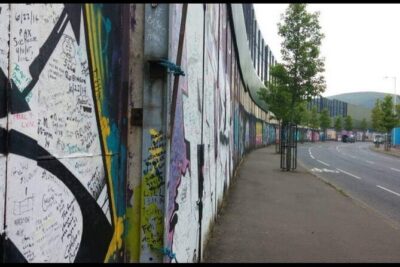
Private Political History & Murals Tour Belfast
Read our review →Browse the lists this tour appears in