
Reviewed · POLITICAL & MURAL TOURS
Belfast Political Tour-Conflicting Stories Walking Tour
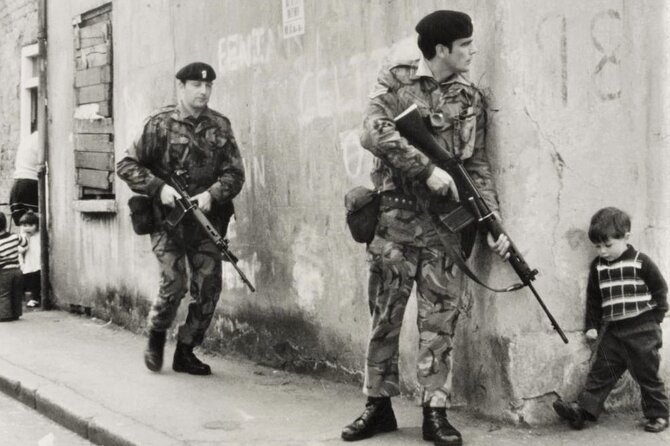
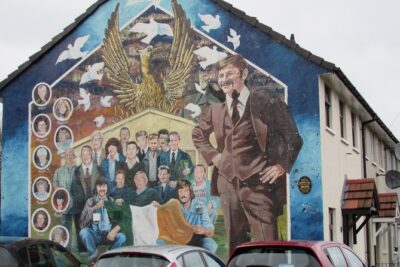
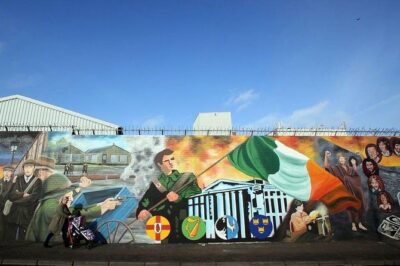
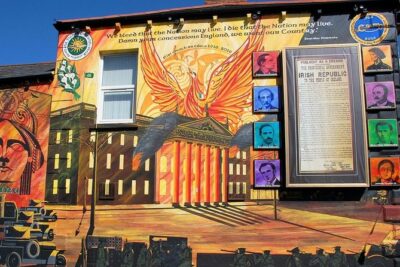
Belfast’s most revealing sights are not grand buildings. They are the murals, memorial gardens, shuttered gates, and peace wall between the Falls and Shankill districts. This walking tour takes you through both communities, with a guide from each side explaining how the Troubles looked from his own street and family.
I like the fact that the tour gives you two distinct voices rather than one polished version of events. I also like the personal focus: guides such as Paul, Ian, Jack, and Mark have spoken about what it was like to grow up during the conflict and why distrust still lingers. The drawback is simple: you spend three hours outdoors beside busy roads, and the subject matter can be upsetting and politically charged.
Key points to know before you book
- Two neighborhoods, two viewpoints: The route moves from the Nationalist Falls area to the Loyalist Shankill area, crossing the story of the conflict from both sides.
- Personal guides matter: Guides have included former Republican and Loyalist or Unionist participants, though the exact names and pairing can change.
- The walk lasts about three hours: Each district receives roughly 90 minutes, with frequent stops at murals, memorials, and sites linked to violence.
- The peace wall is still part of daily life: Gates in the wall may still close at night, a blunt reminder that the division has not vanished.
- Good shoes and warm layers are essential: The route is not steep, but wind, traffic, and long periods outside can make the walk tiring.
- The tour ends on Lower Shankill Road: You finish at 154 Shankill Road, about an eight-minute walk from the starting point and roughly 15 minutes from central Belfast.
Why two guides change the Belfast story
A single political tour can give you useful facts. This one tries to show how the same decades of conflict produced sharply different memories.
You begin in the Nationalist part of West Belfast and later cross into the Loyalist Shankill district. One guide explains the Republican view, including the desire for Irish unity and the role of the IRA. The other explains the Unionist or Loyalist view, including fear of attack, loyalty to Britain, and the loss of friends and family.
That arrangement is the heart of the experience. It does not remove the need for you to think critically. In fact, it may leave you with more questions than answers. That is a good result for a subject this complicated.
The tone is direct rather than glossy. Guides have spoken openly about their own pasts, including involvement in the conflict or life close to it. Some visitors have found the personal accounts moving and illuminating. Others have felt that a guide leaned too hard toward his own side or used language that was difficult to hear. You should expect both advocacy and reflection, not a perfectly neutral classroom lecture.
The strongest guides connect personal memories to dates, places, and wider events. The weaker moments can feel like a series of murals and killings without enough wider explanation. Your experience may depend on the individual guides assigned that day.
More of the murals and the peace walls in Belfast:
- A History of Terror – Belfast City Centre Walking Tour
★ 5.0 · 2,883 reviews - Belfast’s Political Mural Taxi Tour
★ 5.0 · 1,180 reviews - Belfast Troubles Tour: Walls and Bridges
★ 5.0 · 853 reviews
Starting at Divis Tower and entering the Falls
The tour begins at Divis Tower, at the Falls Road end of West Belfast. From here, the first 90-minute section explores the Republican or Nationalist side of the city.
The opening walk introduces the geography that shaped the conflict. The Falls and Shankill districts sit close together, yet the peace wall and its gates have long limited contact between them. You are not just hearing about division in the abstract. You are walking through streets where identity, religion, politics, and security were tied to home addresses.
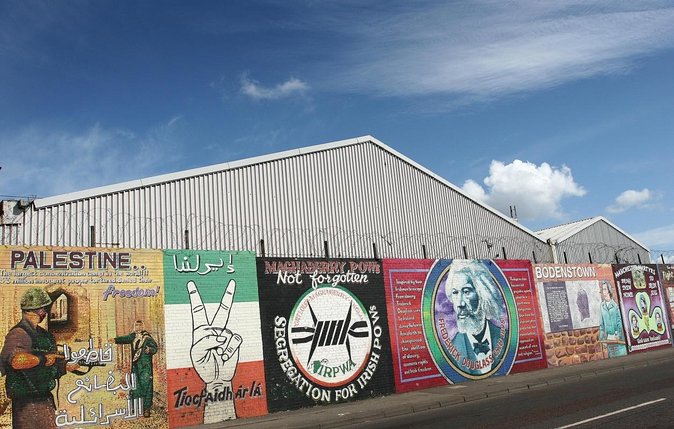
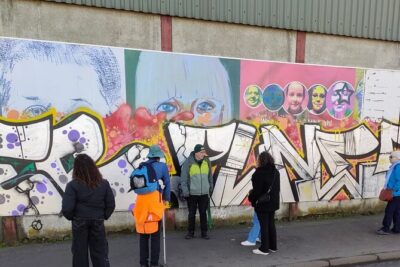
The route includes the International Wall, where murals connect Belfast’s political struggle with causes and conflicts around the world. These paintings are not simple decoration. They show how communities used public walls to announce their beliefs, remember the dead, and frame their place in a wider political story.
The guide then brings you to the Bobby Sands mural. Sands was an IRA member who died during the 1981 hunger strike while serving a prison sentence. His mural has become one of Belfast’s best-known political images, but the tour gives it a local setting and helps explain why it carries such power for many Nationalists.
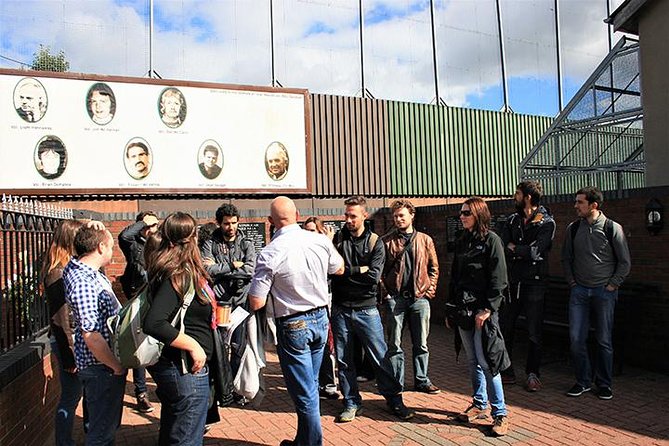
You also visit the D Company memorial garden and Bombay Street. Memorial gardens often make the past feel more personal than a wall-sized political image. Names, photographs, and carefully kept spaces put faces to events that can otherwise become a list of dates and organizations.
Bombay Street is tied to the violence that forced families from their homes during the early years of the Troubles. Here, the guide can show you how physical streets became symbols of fear, resistance, and community survival. Listen closely to the difference between explaining why people acted as they did and excusing what they did. A thoughtful guide should help you see the pressure on a community without asking you to accept every political claim.
Crossing the peace wall
The peace wall is the tour’s physical hinge. It separates the Falls and Shankill areas, and the route visits several points along it.
The name sounds hopeful, but the structure is also a reminder that peace has not always meant normal contact. Gates can still be locked at night, reportedly around 8 p.m., which may surprise you if you assumed the wall was only a historical leftover. Its continued presence raises a hard question: does a barrier prevent violence, or does it keep communities apart and preserve suspicion?
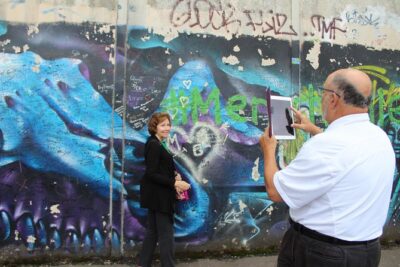
You may see messages written on the wall, and some people bring a pen to add their own. That small act can feel oddly light beside the serious material, so treat it with respect. This is not a tourist prop. It remains part of a living neighborhood and a painful political story.
The route is on public streets, with traffic and buses nearby. The group may gather on pavements while the guide speaks, so stay alert and keep close enough to hear. One poor experience reported on this type of walk involved muffled sound from a microphone and difficulty hearing beside traffic. That is a practical weakness to bear in mind, especially in a group of up to 20 people.
The Shankill Road story
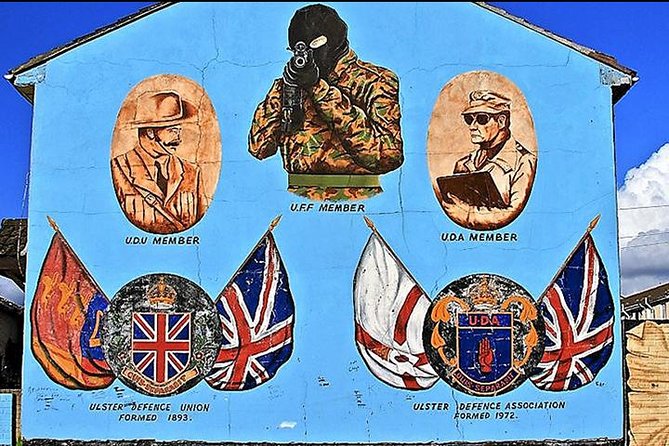
The second 90-minute section moves through the Shankill Road area from a Loyalist or Unionist perspective. This part focuses more on the community’s fear, losses, and belief that Northern Ireland should remain part of the United Kingdom.
Stops include the Shankill Memorial Garden, the Bayardo bombing site, a UVF memorial, the former Frizzells Fish Shop bombing site, and the Somme Memorial. These places reveal how memory works differently on opposite sides of the wall. A person honored as a volunteer in one area may be viewed as a terrorist or killer in another.
The Bayardo bombing is a useful example of why location matters. The guide can explain not only what happened, but how the event affected the surrounding neighborhood and why it remains part of Shankill memory. At the Frizzells site, the account turns toward the civilian cost of the conflict.
The Somme Memorial brings in another layer of Unionist identity. Remembrance of the First World War, especially the Battle of the Somme, has a strong place in Protestant and Unionist culture. You do not need to know the military details in advance. The point is to see how older events and symbols shaped modern political identity.
Some guides focus on personal childhood memories, including friends from both Catholic and Protestant backgrounds who were killed. That can make the second half especially affecting. You may also find it less structured if the guide moves from one memorial to the next without much context. The best approach is to ask clear questions and listen for what the guide is describing, as well as what he may be leaving out.
Other walks around Belfast:
- Best of Belfast Walking Tour
★ 5.0 · 399 reviews - Belfast Eclectic Walking City Center Experience, The Marti Way
★ 5.0 · 348 reviews - Belfast Troubles Murals Street Art and Peace Wall Walking Tour
★ 5.0 · 163 reviews - The Real Eclectic Belfast City Walking Tour/Experience.
★ 5.0 · 152 reviews
What the tour gets right, and where it can fall short
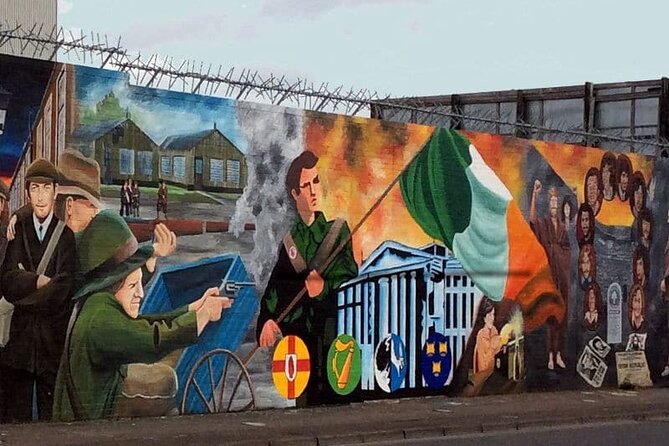
The tour’s greatest strength is its human scale. Books and museums can explain the Troubles, but a former participant describing what he saw, feared, or believed gives the story a different weight. You hear not only about armed groups and political goals, but also about childhood, lost friends, divided streets, and the slow attempt to live with old wounds.
The two-guide format also discourages an easy good-side and bad-side conclusion. Both communities suffered. Both communities also contained people who carried out violence. The tour is at its best when it holds those facts together.
The weaknesses are mostly practical and uneven. Three hours is a long time to stand outside, particularly in Belfast wind. Wear comfortable walking shoes, use layers, and bring water. A snack is sensible, since there may be a short comfort break but this is not a food tour.
Sound can also be a problem. Busy roads may drown out a speaker, and a large group can spread out. If you cannot hear, tell the guide at once rather than quietly losing half the explanation. The walk is generally moderate and has no notable hills, but it still covers a lot of ground because it combines two 90-minute walks.
The subject itself can be difficult. Expect accounts of bombings, murders, imprisonment, and paramilitary activity. If you want a light introduction to Belfast, choose another outing. If you want clear, comfortable answers about who was right, this may frustrate you. The title is accurate: you will hear conflicting stories.
Is $36.05 good value?
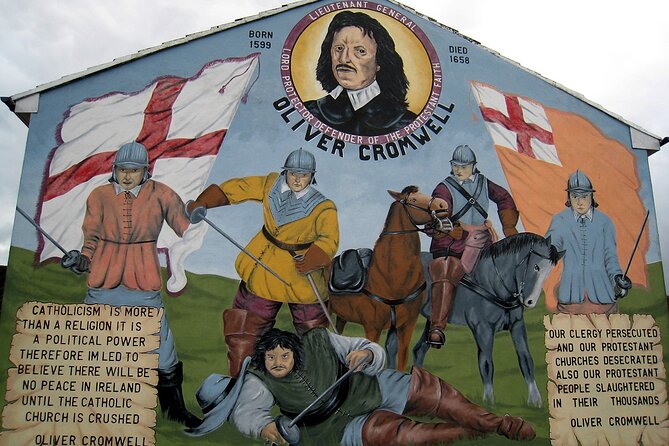
At about $36.05 per person, the tour costs more than a simple self-guided mural walk, but you are paying for access to local voices and a full three-hour route through both districts.
The value is strongest if you want the personal and political background behind the images. A mural photographed without explanation is only part of the story. A guide can tell you who is remembered, why a particular street matters, and how the area still functions today.
The price is less attractive if your main goal is sightseeing or photography. Much of the route takes place on ordinary public streets, and admission to the memorials and murals is free. You are paying for interpretation, not entry tickets.
The maximum group size is 20. That is manageable, but not intimate. Ask questions during natural pauses, and stay near the guide. The tour is offered in English and uses a mobile ticket.
Getting there and finishing the walk
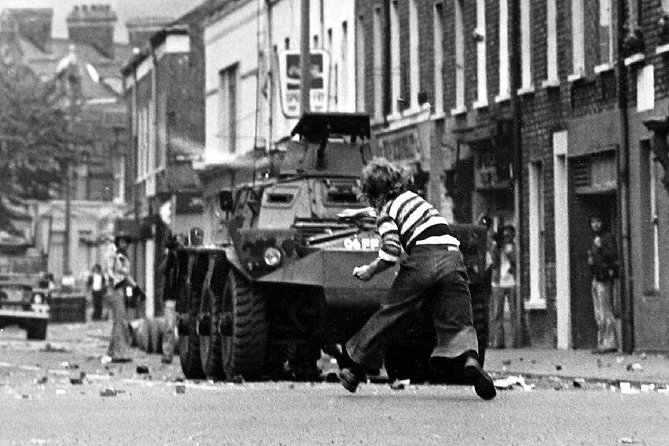
Meet at Divis Tower, Belfast BT12 4QA. The tour ends at 154 Shankill Road, Belfast BT13 2BE, in the Lower Shankill area.
The ending point is not far from the start. It is about an eight-minute walk back to Divis Tower and about 15 minutes to Belfast city centre. The guide can help with directions or arrange a taxi if needed.
Plan your day around the three-hour duration rather than treating this as a quick stop between attractions. The walk is outside from beginning to end, and the emotional weight can also make it feel longer than a normal city stroll.
You can cancel for a full refund if you do so at least 24 hours before the start time. Changes made inside that window are not accepted, and late cancellations are not refunded. Because the experience requires suitable weather, a cancellation caused by poor conditions should result in another date or a full refund.
Who should book the Conflicting Stories walk?
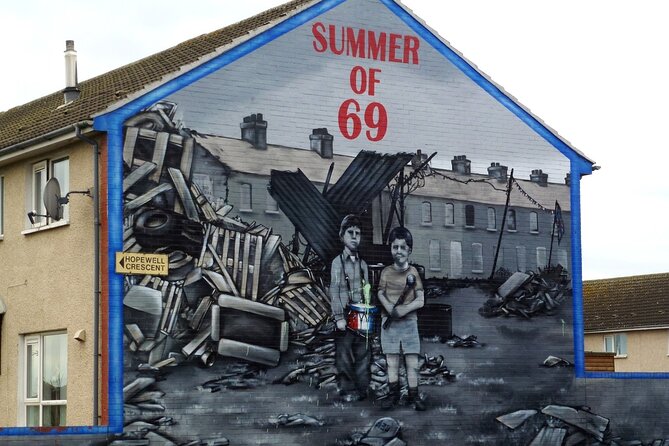
I would choose this tour if you want to understand how the Troubles still shape Belfast’s neighborhoods. It suits curious adults, students of modern political history, and anyone who prefers first-person accounts to a standard sightseeing script.
It is also a good choice early in a Belfast visit. The route gives you context for murals, flags, memorials, and the continuing presence of the peace wall. Afterward, you will look at the city with more care.
I would be cautious if you dislike politically charged discussion, graphic stories, or guides who speak from strong personal positions. You should come with an open mind, but that does not mean accepting every statement without question. Ask respectfully, compare both accounts, and allow the discomfort to be part of the learning.
FAQ
How long does the Belfast Political Tour last?
The tour lasts approximately three hours. The Falls and Nationalist section takes about 90 minutes, followed by about 90 minutes in the Shankill and Loyalist area.
Where does the tour begin?
The meeting point is Divis Tower, Belfast BT12 4QA, UK.
Where does the tour end?
The tour ends at 154 Shankill Road in the Lower Shankill area. It is about an eight-minute walk back to Divis Tower and about 15 minutes from Belfast city centre.
What will I see on the tour?
You will see political murals and memorials on both sides of the peace wall. Stops include the International Wall, Bobby Sands mural, D Company memorial garden, Bombay Street, Shankill Memorial Garden, the Bayardo bombing site, a UVF memorial, the Frizzells Fish Shop bombing site, and the Somme Memorial.
Is the tour suitable for most people?
Most people can participate, and service animals are allowed. You should be prepared for about three hours of walking and standing outdoors. Comfortable footwear and warm layers are recommended.
What is the cancellation policy?
You can receive a full refund if you cancel at least 24 hours before the start time. Cancellations or changes made less than 24 hours before the start are not accepted for a refund. If poor weather cancels the tour, you will be offered another date or a full refund.
Should you book it?
Book this walk if you want Belfast’s political story told from two streets, two communities, and two personal viewpoints. The experience is not tidy, neutral in every sentence, or easy to forget. That is precisely its value.
For roughly $36, you get a substantial three-hour introduction to the Falls, Shankill, murals, memorials, and peace wall, with guides who have lived close to the conflict. Wear warm clothes, bring patience, and expect to keep thinking about what you heard long after the walk ends.
Just added in Belfast
- Belfast Black Cab Taxi Private Tour 2hr with Original Guides★ 5.0 · 10 reviews
- Luxury Party Bike Tour of Belfast City (Individual Seat)★ 4.5 · 21 reviews
- The Hippy Bike Fully Enclosed Party Bike Tour (Private Bike)★ 5.0 · 18 reviews
- Express Terror and Peace 90 min Private Belfast Cab /Taxi Tour★ 5.0 · 24 reviews
- Taste & Tour: Guided Gin Tour in Belfast★ 5.0 · 24 reviews
- Titanic Maritime Walking Tour★ 5.0 · 23 reviews
- Giants Causeway private tour from Belfast★ 5.0 · 57 reviews
- Cab Tours Belfast Famous Black taxi tours 2 hrs The Troubles★ 4.5 · 29 reviews
Political & Mural Tours, compared.
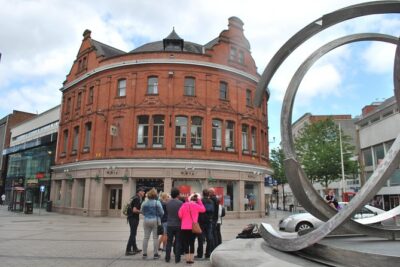
A History of Terror – Belfast City Centre Walking Tour
Read our review →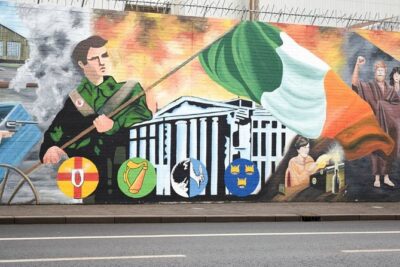
2 Hour Private Belfast Taxi Cab Tour of Troubles & Peace walls
Read our review →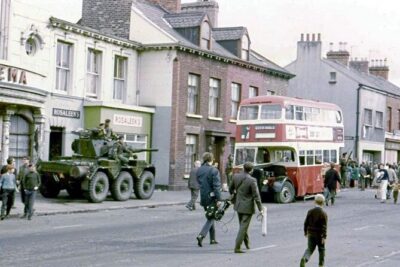
2 hours Belfast Original Drivers The Troubles Black Taxi Tour
Read our review →Browse the lists this tour appears in