
Reviewed · POLITICAL & MURAL TOURS
IRA Troubles Conflict Private Tour Museum Graves Murals and Political Analysis
Belfast’s Troubles are easiest to grasp when you see the places where the conflict happened. This private tour takes you through Falls Road, Shankill Road, the peace walls, Milltown Cemetery, Republican memorial gardens, and the Bobby Sands murals, then adds access to a small Irish Republican history museum that is not generally open to the public.
I like two things here: the private format lets you ask direct questions, and the guides can add personal memories of Belfast during the conflict. You also get far beyond the usual mural photo stop. The main drawback is clear: this is an Irish Republican viewpoint, not a balanced account of both communities, so you should book a different tour if you want equal time for Loyalist and British arguments.
Key points to know before booking
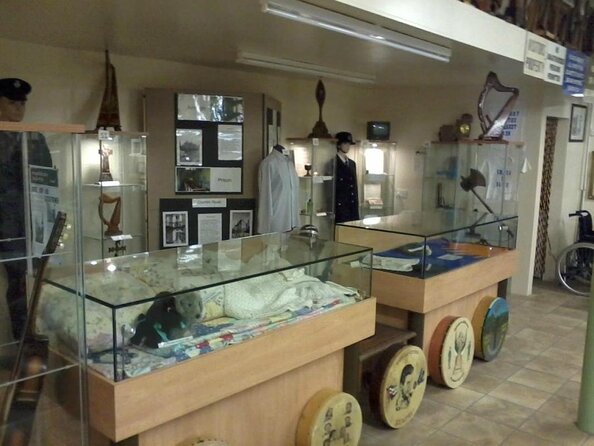
- Private access to a Republican museum: The Eileen Hickey Irish Republican History Museum may include former prisoners sharing their experiences.
- Both sides of the peace wall: You see the barriers separating Republican and Loyalist districts and can leave a message of peace.
- Milltown Cemetery matters: The Republican plot includes Bobby Sands and other IRA volunteers.
- Guides bring lived experience: Barry, Paula, Joe, Brendan, Ciarán, and other guides have been praised for personal stories and flexible conversation.
- A fast-moving three hours: Many stops are brief drive-bys, while the cemetery and museum receive more time.
- Pickup is useful but not always free: Central Belfast pickup is included, with added charges for cruise ships and several outlying locations.
Why this Belfast tour feels different
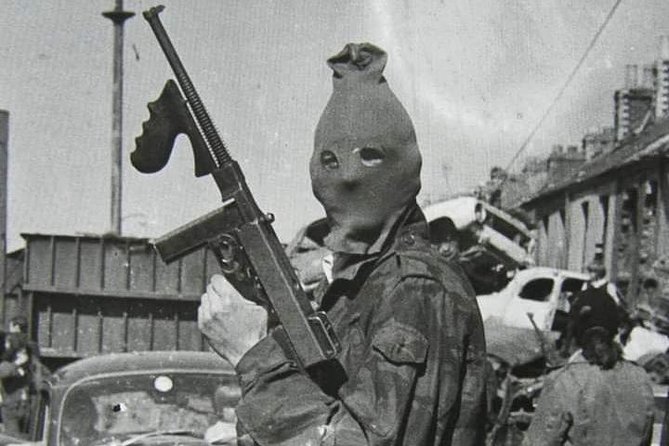
Most Belfast political tours show you murals and explain the broad outline of the Troubles. This one takes a more specific route through Republican Belfast and treats the conflict as a long political story, beginning with centuries of Irish resistance and moving through the modern peace process.
That focus gives the tour its strength. You hear how the Republican movement explains partition, British rule, discrimination, the growth of the Provisional IRA, the prison protests, and the 1981 hunger strikes. You also see the memorials that keep this story alive in local streets.
It also creates the tour’s main limitation. The guide is not expected to present an equal account of Republican, Loyalist, and British positions. Loyalist groups, the UDA, the UFF, and the UVF are discussed, especially on Shankill Road, but the larger story is told through Republican eyes.
That is not a flaw if you understand the product. It is useful for anyone who wants a perspective that is often less visible in general city sightseeing. It is not the best single choice for someone looking for a neutral overview.
More of the murals and the peace walls in Belfast:
- A History of Terror – Belfast City Centre Walking Tour
★ 5.0 · 2,883 reviews - Belfast’s Political Mural Taxi Tour
★ 5.0 · 1,180 reviews - Belfast Troubles Tour: Walls and Bridges
★ 5.0 · 853 reviews
Falls Road murals and the first look at the divide
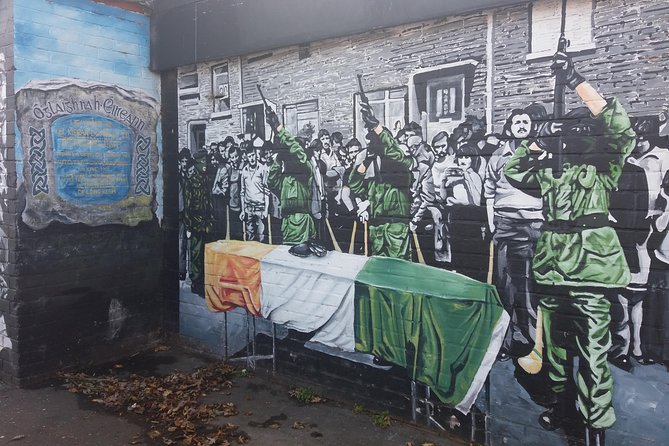
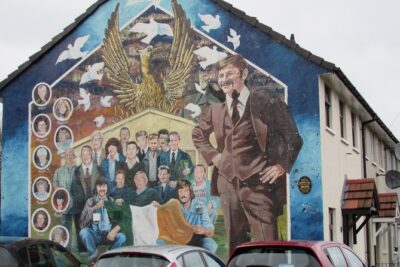
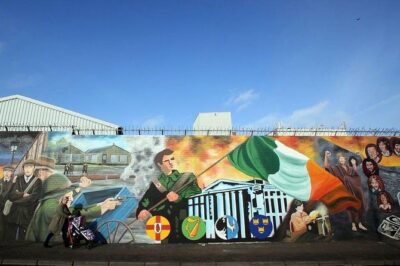
The tour usually begins around the International Mural Wall on Divis Street and the Falls Road. This is where political art becomes a history lesson rather than a backdrop for photographs.
Your guide explains how violence escalated in 1969, how Nationalist and Unionist districts became divided, and how former prisoners helped create many of the murals. The artwork covers Republican prisoners, hunger strikers, Irish unity, international causes, local volunteers, and community memory.
You may spend only about ten minutes at the first mural area, so this is not a slow art walk. The value comes from having the images explained in place. Without context, a mural can look like political decoration. With a local guide, names, dates, symbols, and slogans begin to connect.
The private vehicle helps here. You are not walking the full route between every site, and the guide can explain what you are seeing while handling the driving and navigation.
The peace walls between Falls and Shankill
The peace walls are among Belfast’s most striking reminders that the conflict did not end simply because large-scale violence declined. These barriers separate mainly Republican and Nationalist Catholic neighborhoods from mainly Loyalist and Unionist Protestant districts.
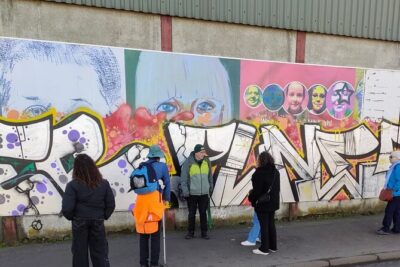
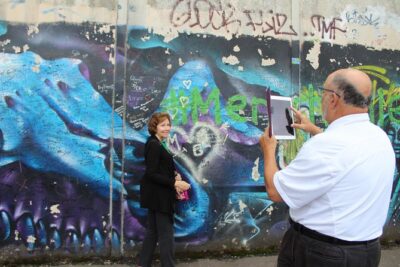
You visit both sides of the wall, hear why it was built, and can write your name or a message of peace. That small act is part of the experience, but the larger point is the wall itself. Many barriers were meant to be temporary after the riots of 1969. Some remained because they reduced the risk of attacks, and more appeared even after the IRA ceasefire in 1994.
The most famous wall near the Falls and Shankill stretches for about 800 metres and rises in several levels. From the vehicle, you get a practical sense of how streets, gates, and barriers shaped daily life.
I find this one of the strongest parts of the tour because it shows that Belfast’s division is physical. You do not only hear that communities were separated. You see concrete, locked gates, and roads that still do not function like ordinary city streets.
Shankill Road and the Loyalist side
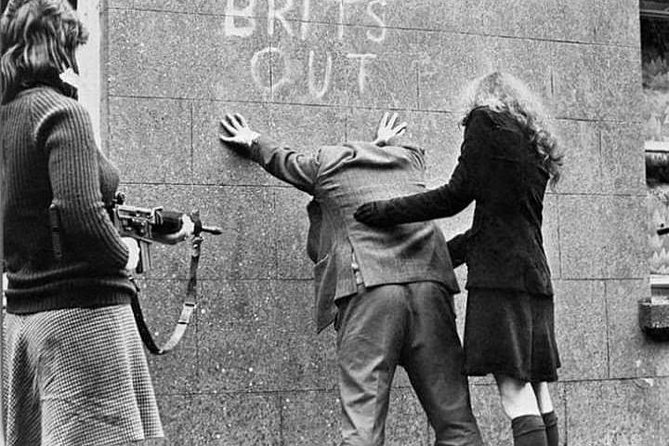
The tour then crosses into Shankill Road, a center of Ulster Loyalism. Murals here honor Loyalist organizations and describe their role in the conflict from a Unionist and pro-British position.
The guide explains how Loyalism developed, why the Shankill became a stronghold, and how groups including the UDA, UFF, and UVF operated. You will see murals showing masked men and weapons, which can be unsettling. That is part of the point. These are not polished heritage displays. They are political statements tied to living communities.
The stop may last only around ten minutes, so you should not expect a full treatment of Loyalist history. Still, seeing both the Republican and Loyalist sides in one short route helps you understand why the peace walls exist.
If you want a balanced study of the two traditions, ask questions here. The private setup gives you room to do so. Just remember that the tour’s main narrative will return to Republican history.
Other historic stops in Belfast:
- Giants Causeway & Castles Tour from Belfast: Guided tour
★ 5.0 · 1,432 reviews - Giants Causeway, Rope Bridge, Carrickfergus Castle and Dark Hedges Tour
★ 4.0 · 596 reviews - Giant’s Causeway Tour from Belfast – Luxury Bus + Castles Tour
★ 4.5 · 372 reviews - From Belfast-Giants Causeway, Dunluce Castle and Dark Hedges tour
★ 4.5 · 193 reviews
Clonard, Bombay Street, and the scars of 1969
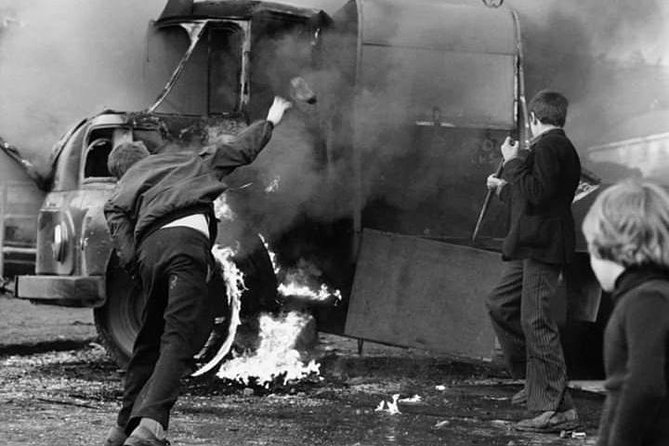
Clonard is one of the most emotional areas on the route. The Clonard Martyrs Memorial Garden honors Republican volunteers, civilians, and Republican prisoners from the area across several generations.
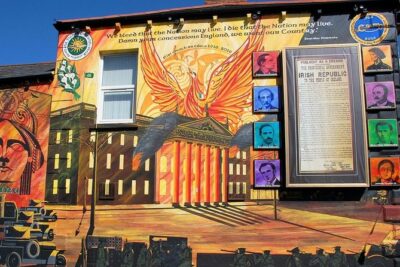
The garden includes a Celtic cross, memorial plaques, lists of names, provincial Irish symbols, benches dedicated to individuals, and a phoenix motif linked to the rise of the Provisionals. Its language is openly commemorative and political. This is a place of mourning, pride, and continued belief in Irish unity.
Your guide also explains the attacks of August 1969, when houses in Bombay Street and nearby streets were burned and Catholic residents were forced to flee. Those attacks helped lead to the first peace walls.
You spend about thirty minutes in this area, making it one of the more substantial stops. Allow yourself time to read. There are many names and dates, and the memorial is not something you can absorb in one quick photograph.
Clonard Monastery is nearby. Priests including Alec Reid and Gerry Reynolds worked for peace from here, and the monastery sat on a front line between the Falls and Shankill districts. The stop is brief, but it adds an important reminder: religious figures were not only observers. Some became active intermediaries during the conflict.
Milltown Cemetery and Bobby Sands
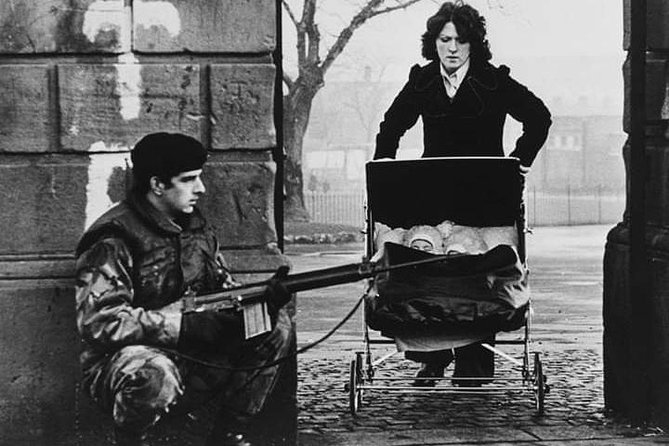
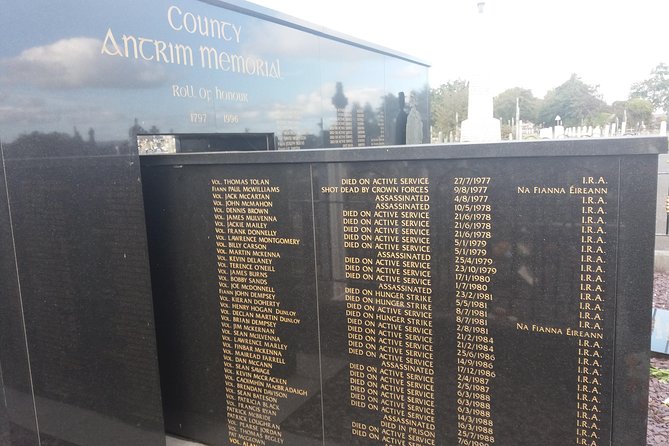
Milltown Cemetery is a major stop for understanding Republican memory. The Republican plots contain volunteers killed in the 1920s, the 1940s, the 1950s and 1960s, and the later Troubles. The National Graves Association maintains many of these graves.
Bobby Sands is the best-known name here. He was a Provisional IRA member who died on hunger strike in 1981 after 66 days in prison. He had been elected as a Member of Parliament shortly before his death, which gave the hunger strike international political weight.
You visit his resting place and the Republican plots, including the newer plot containing 77 IRA volunteers. Red Hand symbols mark many graves, and the setting makes clear how the community preserves its own account of sacrifice.
This stop lasts about twenty-five minutes. That is enough for explanation and photographs, but not enough to read every inscription. One practical point comes from the tour’s format: if you have a family grave to visit, tell the guide early. A past tour was adjusted to allow a guest to buy flowers and place them at a grave.
One caution: the cemetery can feel heavy. If you prefer a light sightseeing morning, this is not that kind of excursion. The subject is war, death, imprisonment, and remembrance.
Republican museums, weapons, and prison memory
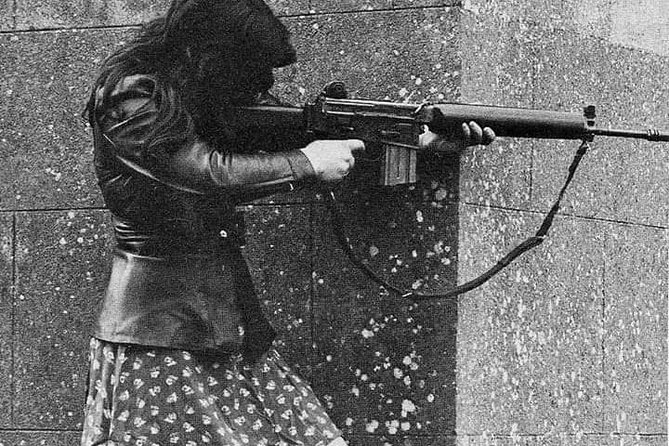
The private museum is the tour’s most unusual feature. It focuses on Irish Republican resistance and the history of the IRA, with material connected to the conflict. You may meet former prisoners who share their own experiences.
The museum is open only from 10 a.m. to 2 p.m., Tuesday through Saturday. If it is closed, the route changes to Ballymurphy. Confirm the museum timing when you book, especially if your Belfast visit is short.
The tour also includes a chance to see and handle plastic and rubber bullets used by British Crown forces. That detail makes the conflict more tangible than a simple display case. You are dealing with objects linked to crowd control, injury, and fear in neighborhoods that experienced repeated military operations.
Because the museum is private, the visit may feel less polished than a major public institution. That is part of its value. You get a local collection and a clear point of view rather than a broad national presentation.
Bobby Sands murals and gardens of remembrance
The route includes more than one Bobby Sands mural. One stop focuses on the famous mural itself, while another connects the image to the blanket protest, dirty protest, and 1981 hunger strikes.
You also visit the D Company, or 2nd Battalion, Garden of Remembrance. The Belfast Brigade was divided into battalions, with the 2nd Battalion based around Falls Road, Clonard, and Ballymurphy. The garden remembers local volunteers and links individual names to the wider Republican organization.
The tour may also point out murals connected with the Battle of the Falls in 1970, the Falls Road massacre of 1920, and twelve of the hunger strikers. These references span different periods, so listen for the dates. The same streets carry memories from the War of Independence, later IRA campaigns, and the Troubles.
Ballymurphy, Divis Tower, and the quick drive-bys
Ballymurphy and Divis are seen mainly from the vehicle or during short photo stops. You pass murals dedicated to local volunteers, including Jim Bryson, and see references to An Gorta Mór, the Great Famine.
Divis Tower overlooks the Falls and once held a British Army sniper position and observation post until 2005. The tour also points out names and murals linked with the first two victims of the Troubles.
These stops help you understand the size of Republican Belfast, but five minutes is not enough for detailed exploration. Think of them as visual markers in a moving history lesson. If one site matters especially to you, say so. A private tour can sometimes shift its emphasis.
Three hours, private transport, and the real value
The tour costs $255.50 per person and lasts about three hours. That is a high price for a short city tour, but it includes private transportation, an air-conditioned vehicle, hotel pickup from the central meeting location, and a private guide for your group.
The value depends on how much you want personal attention. For a couple or family, the price buys the freedom to ask questions without waiting for a large group. It also removes the need to find the peace walls, memorial gardens, cemetery, and Republican districts on your own.
The route covers a huge amount in three hours. Several stops last only five or ten minutes, while Clonard, Milltown Cemetery, and the museum receive more time. If you want long walks, quiet museum browsing, or every mural explained in detail, this pace may feel rushed.
Central pickup is available from the Leonardo hotel. Pickup at the cruise port costs $25 each way. Some locations, including Titanic Belfast, Crumlin Road Gaol, Queen’s University, the Botanical Gardens, Ulster Museum, Lanyon train station, and St. George’s Market, can also involve extra charges. Airport pickup and drop-off are not offered.
A Mercedes V-Class upgrade with leather reclining seats and electric doors may be available for £25. That is optional, and availability is not guaranteed.
Who should book this experience
I would choose this tour if you have a strong interest in Irish Republican history, political murals, prison protest, or the human effect of the Troubles. It is also a good choice if you want to see places that standard sightseeing routes often skip.
The tour suits people who prefer conversation to a scripted bus commentary. Guides such as Barry, Paula, Joe, Brendan, and Ciarán have been praised for personal stories, local connections, humor, and the ability to adjust the route around questions.
I would be cautious if you want a neutral introduction. The title and route make the viewpoint clear. You will hear about Loyalist and British actions, but the tour is built around Republican history and interpretation.
Wear comfortable shoes, even though much of the route is by vehicle. You will get out at memorials, the cemetery, murals, and the peace wall. Bring questions, because the private format is at its best when you use it.
Free cancellation is available up to 24 hours before the start time. Changes or cancellations inside that window are not accepted for a refund.
Should you book the Belfast Republican tour?
Book it if you want a focused, personal account of Belfast’s conflict and are comfortable hearing one side of a contested story. The private museum, Milltown Cemetery, Clonard memorials, and peace walls give the tour more weight than a simple mural circuit.
Skip it if you want equal Republican and Loyalist treatment, or if $255.50 per person feels too steep for three hours. In that case, choose a balanced Belfast political tour and consider this one later for a second, more focused look.
FAQ
How long does the tour last?
The tour lasts approximately three hours.
What political viewpoint does the guide present?
The tour presents the conflict from an Irish Republican perspective, including Republican history, the IRA, prison protests, murals, memorials, and the peace process.
Is the tour private?
Yes. Only your group participates.
What is included in the price?
Private transportation, an air-conditioned vehicle, central Belfast pickup, a private guide, visits to the murals, peace walls, Milltown Cemetery, memorials, and the Republican history museum when it is open are included.
Is hotel pickup available?
Free pickup is offered from the central meeting location at the Leonardo hotel. Extra charges can apply for other locations.
Can I be picked up at the cruise port?
Yes, but cruise port pickup costs $25 each way and is paid directly to the guide by cash or card.
Is airport pickup offered?
No. The tour does not pick up or drop off at airports.
When is the private museum open?
The museum is open from 10 a.m. to 2 p.m., Tuesday through Saturday.
What happens if the museum is closed?
If the museum is closed, the tour includes a visit around Ballymurphy instead.
Can I write on the peace wall?
Yes. You can sign your name and write a message of peace on the wall.
Can most people take this tour?
The tour information says most people can participate, and it is near public transportation. You should still contact the provider if you have specific mobility needs.
Just added in Belfast
- Belfast Black Cab Taxi Private Tour 2hr with Original Guides★ 5.0 · 10 reviews
- Luxury Party Bike Tour of Belfast City (Individual Seat)★ 4.5 · 21 reviews
- The Hippy Bike Fully Enclosed Party Bike Tour (Private Bike)★ 5.0 · 18 reviews
- Belfast’s Sensory Cocktail Experience with 4 Cocktails★ 5.0 · 61 reviews
- Titanic Experience and Giant’s Causeway tour from Belfast★ 4.5 · 70 reviews
- Titanic Maritime Walking Tour★ 5.0 · 23 reviews
- Express Terror and Peace 90 min Private Belfast Cab /Taxi Tour★ 5.0 · 24 reviews
- Taste & Tour: Guided Gin Tour in Belfast★ 5.0 · 24 reviews
Political & Mural Tours, compared.
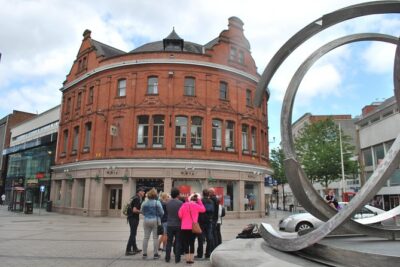
A History of Terror – Belfast City Centre Walking Tour
Read our review →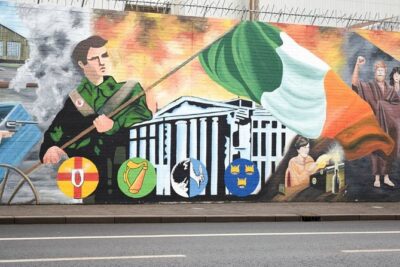
2 Hour Private Belfast Taxi Cab Tour of Troubles & Peace walls
Read our review →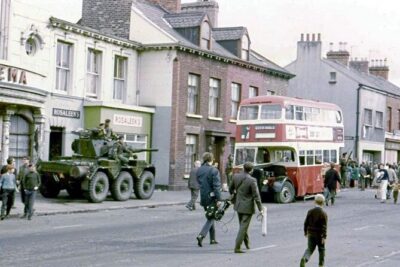
2 hours Belfast Original Drivers The Troubles Black Taxi Tour
Read our review →Browse the lists this tour appears in