
Reviewed · TOURS IN BELFAST
Private Belfast Explore Like a Local
Belfast’s story is written across its walls. This private tour takes you from the grand Victorian center to the Falls and Shankill neighborhoods, where murals, memorials, and peace barriers explain the city’s divided past. I like the chance to ask difficult questions directly, and I like that guides such as Barry and Joe add personal knowledge to the history.
I also appreciate the private vehicle and central hotel pickup. You can cover far more ground than on foot, including Belfast Castle and the Titanic Quarter. The main drawback is the pace: with roughly 20 stops in only 2 hours 40 minutes to 3 hours, many places are quick photo stops rather than full visits.
Key points to know before booking
- The Peace Walls and murals are the heart of the tour: You see Falls Road, Shankill Road, Divis, Bombay Street, and the International Mural Wall up close.
- Barry and Joe are named local guides: Their approach includes direct discussion of the Troubles and room for questions.
- The private car saves time: Central Belfast hotel and cruise ship pickup and drop-off are included.
- The route covers both old and new Belfast: Victorian gardens, Queen’s University, Belfast Castle, the docks, Titanic Quarter, and modern public art all appear.
- This is history first, sightseeing second: Some stops can feel politically weighted, so listen carefully and ask for context.
- Several major attractions are photo stops only: Entry to Belfast Castle, SS Nomadic, and Titanic Belfast is not included.
A quick ride through Belfast’s complicated story
The most useful way to see Belfast is to connect its neighborhoods. A clock tower, a cathedral, a shipyard crane, and a painted wall each tell part of the story, but the connections between them matter more than any single sight.
This tour does that by car. You begin in south Belfast, cross into west Belfast, visit the interface between the Falls and Shankill communities, then move through the city center and out to the docks. You finish at the Crown Liquor Saloon, a good place to pause with a drink after several hours of serious history.
The vehicle is air-conditioned, and the private format means only your group takes part. That gives you flexibility to ask questions or request more explanation, though the published route is packed enough that you should not expect long walks or extended museum visits.
A few more things worth booking around Belfast
- Private Black Taxi Belfast City Tour
★ 5.0 · 2,188 reviews - 2 Hour Private Belfast Taxi Cab Tour of Troubles & Peace walls
★ 5.0 · 240 reviews - Private Political History & Murals Tour Belfast
★ 5.0 · 182 reviews
Botanic Gardens and Queen’s University
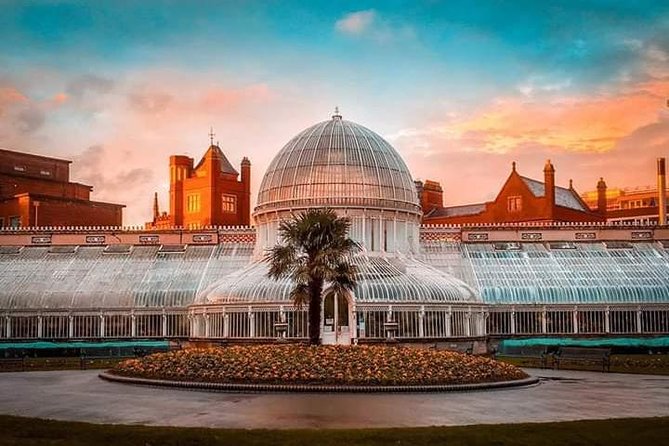
Botanic Gardens gives the tour a calm opening. Founded in 1828, the 28-acre park reflects Belfast’s Victorian interest in botany and public recreation. Its best-known feature is the Palm House, an early glass-and-iron conservatory completed in 1840.
You have about 30 minutes here, with admission included. That is enough to see the gardens and understand their place in south Belfast, though not enough for a slow botanical visit if the schedule is running tight. The Tropical Ravine and nearby Ulster Museum are also part of the setting, but the tour does not promise a museum visit.
Queen’s University follows with a shorter 15-minute stop. The Lanyon Building gives you a handsome example of 19th-century architecture and helps explain the character of the surrounding Queen’s Quarter. The university opened as Queen’s College, Belfast, in 1849 and now offers more than 300 degree programs.
I like this early pairing because it shows a side of Belfast that can disappear in discussions of conflict. The city is not only murals and memorials. It is also a university city with formal buildings, public gardens, and an active student district.
Rise, Divis Tower, and the first look at the Troubles
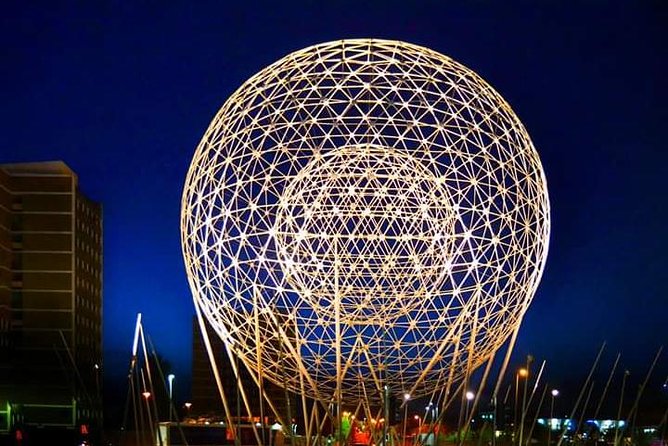
The Rise sculpture, known locally by several informal nicknames, is a huge metal sphere at the Broadway roundabout. The sculpture is 37.5 meters high and was built in 2011 beside one of the city’s main road gateways.
You get about 10 minutes here. This is a roadside photo stop, not a gallery visit, but the work is easy to spot and gives you a visual marker as the tour moves toward west Belfast.
Divis Tower offers much heavier context. Built in 1966 as part of a large housing complex, the tower sits near the meeting point of Falls Road and Shankill Road. During the Troubles, the British Army used the upper floors as an observation post, reaching it at times by helicopter.
The guide’s explanation matters here because the building is tied to several painful events, including the 1969 killing of nine-year-old Patrick Rooney and the 1981 shooting of INLA member Emmanuel McClarnon. You have about 15 minutes, so expect an exterior explanation rather than an extended architectural visit.
This is one point where a private guide helps. You can ask what happened, how the neighborhood changed, and how local memory differs across communities. The subject is not light, and the quality of the explanation depends on the guide’s balance and care.
Peace Walls, Falls Road, and St Peter’s Cathedral
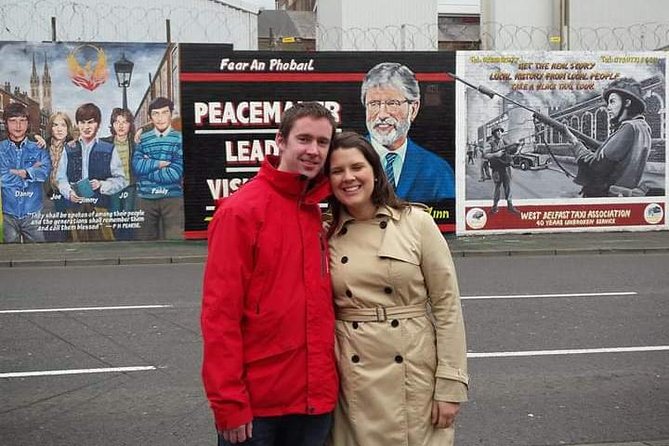
The Peace Wall is the tour’s central stop. These barriers separate mainly Catholic and nationalist neighborhoods from mainly Protestant and unionist ones. Some sections reach up to 25 feet high, and gates can still close at night.
You are given about 30 minutes at the wall, with time to sign your name and leave a message of peace and hope. That small act can feel personal, but remember that the wall is not a historical relic. It remains part of daily life.
Belfast has at least 59 peace walls and related structures, stretching for more than 21 miles. The first barriers went up after the violence of 1969 and were intended to last only a short time. Many became permanent because they reduced direct street violence, even as they kept communities apart.
The tour includes more than one Peace Wall stop, with another 30-minute section focused on the broader peace-line system. The repeated attention makes sense, since the barriers are central to understanding Belfast, but you may find the itinerary feels repetitive if you prefer a wider range of attractions.
St Peter’s Cathedral provides a different view of west Belfast. Built in the 1860s for the growing Catholic population, it opened in 1866, with its twin spires added in 1886. It became the cathedral church for the Diocese of Down and Connor in 1986.
You have about 20 minutes here. The Scrabo sandstone exterior, hammer-beam ceiling, and listed status make it worth seeing even if religious buildings are not your main interest. Its location also shows how closely churches, housing, murals, and political landmarks sit together in west Belfast.
Same city, a different sort of day out:
- Titanic Belfast Entrance Ticket: Titanic Visitor Experience Including SS Nomadic
★ 4.5 · 3,698 reviews - Cab Tours Belfast Famous Black Taxi Tours
★ 5.0 · 3,633 reviews - A History of Terror – Belfast City Centre Walking Tour
★ 5.0 · 2,883 reviews - Game of Thrones and Giant’s Causeway Full-Day Tour from Belfast
★ 5.0 · 2,291 reviews
Bobby Sands, Clonard, and Shankill Road
The Bobby Sands mural is one of the most recognized political images in Belfast. It commemorates Sands, a Provisional IRA volunteer who led the 1981 hunger strike and died in prison that year. The mural includes the phoenix, the lark, the harp, and other symbols linked to Irish republican history.
This is a 10-minute photo stop, so the guide’s explanation is important. You will get the basic story and symbolism, but not a long seminar on the hunger strike. Ask questions if you want to understand why Sands remains a powerful figure to some people and a deeply divisive one to others.
The Clonard Martyrs Memorial Garden adds another republican memorial site. It commemorates volunteers, civilian casualties, and prisoners connected with the Greater Clonard area. The memorial uses Celtic designs, lists of names, and references to people killed during the conflict.
The nearby Clonard Monastery has its own wartime history. During the Belfast Blitz, more than 300 Protestants from the nearby Shankill area sheltered in its crypt. That detail is useful because it complicates the simple image of two communities living with no contact. Fear divided Belfast, but moments of protection and shared humanity also existed.
Shankill Road offers the unionist and loyalist side of the story. It runs through a mainly working-class Protestant area and is separated from the Falls by peace lines. You spend about 20 minutes here, seeing murals and hearing how the area connects to Ulster loyalism and the wider conflict.
The strongest part of this section is the contrast. You see two neighborhoods close together, each with its own symbols, memorials, losses, and political language. The tour is at its best when the guide explains both sides without turning the visit into a simple good-versus-bad story.
One caution is worth stating plainly. A past tour experience described the commentary as strongly favorable toward the IRA. That does not mean every guide handles the subject the same way, but you should expect personal interpretation alongside the facts. If balance matters to you, ask direct questions and listen for how the guide describes both republican and loyalist violence.
Belfast Castle and the city’s grander side
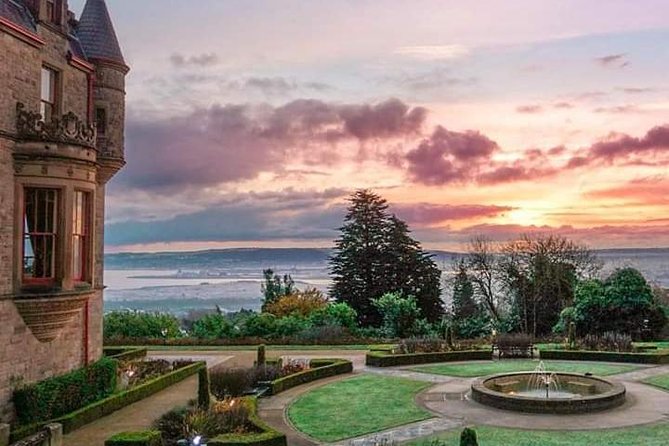
Belfast Castle sits on Cavehill, about 400 feet above sea level. The position gives you views across Belfast and Belfast Lough, and the building itself uses a Scottish baronial style designed by Charles Lanyon and his son.
The castle was built between 1811 and 1870 for the Donegall family and later given to Belfast City Council in 1934. Its garden includes nine cats in sculptures, mosaics, and clipped shrubs, a nod to the old belief that Belfast Castle’s fortune depended on a cat.
You have about 30 minutes here, but admission is not included. This is an important value detail. You can see the exterior and enjoy the setting without paying extra, but a full interior visit would require additional planning and time.
Belfast Castle also gives the route a welcome pause from conflict history. If the west Belfast section feels intense, the hilltop setting helps you reset before returning to the city center.
Clock tower, Big Fish, and Belfast’s maritime identity
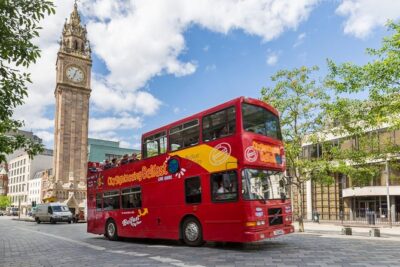
The Albert Memorial Clock is one of Belfast’s best-known landmarks. Completed in 1869, it rises 113 feet in Queen’s Square and combines French and Italian Gothic details. Because it was built on wooden piles over reclaimed ground, the tower leans about four feet from vertical.
That earned it the local joke that it has the time and the inclination. You have about 10 minutes here, enough for photos and a quick explanation of the clock’s history. The nearby public spaces have changed greatly since the days when the dock area had a rougher reputation.
The Big Fish, also called the Salmon of Knowledge, sits near Donegall Quay. This 10-meter ceramic mosaic is covered with images and text about Belfast, from older history to newspaper headlines and contributions by local schoolchildren.
You get about 10 minutes. Look closely at the tiles if you have time. The sculpture works like a public history book, and it is more rewarding than a quick photograph suggests.
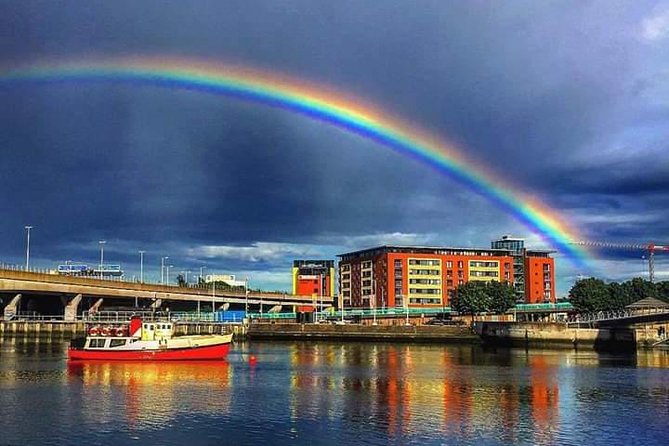
The twin Samson and Goliath cranes then point to Belfast’s shipbuilding past. Built by Krupp for Harland and Wolff, Goliath was completed in 1969 and Samson in 1974. They rise to 96 and 106 meters respectively.
Despite the popular association, these cranes did not build the Titanic. They came later, but they now dominate the city’s skyline and remain a strong reminder of the industrial scale that once defined Belfast.
Titanic Quarter, SS Nomadic, and the Crown Bar
SS Nomadic is the only surviving White Star Line vessel. Launched in Belfast in 1911, it carried passengers and mail to larger ships, including RMS Olympic and RMS Titanic.
The stop is a five-minute photo opportunity, and admission is not included. If you want to go aboard, make separate plans and allow more time than this tour provides.
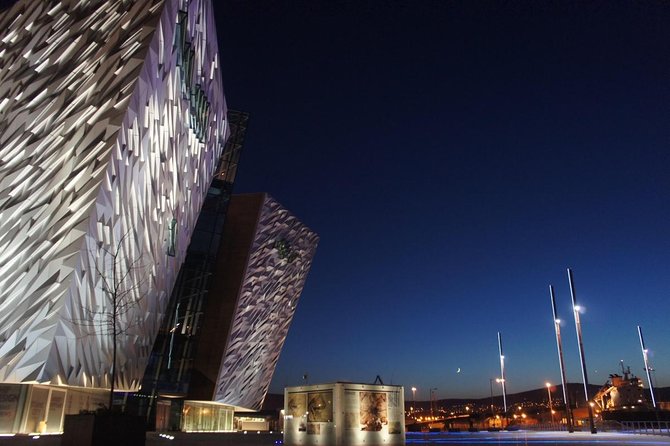
Titanic Belfast is also treated as a photo stop rather than a museum visit. The attraction sits in the former shipyard area now known as Titanic Quarter, a 185-acre waterfront district with apartments, studios, education facilities, and public spaces.
That distinction matters. This tour gives you the setting and the outside view, but it does not replace a full visit to Titanic Belfast. If the Titanic is your main reason for coming to Belfast, schedule the museum separately.
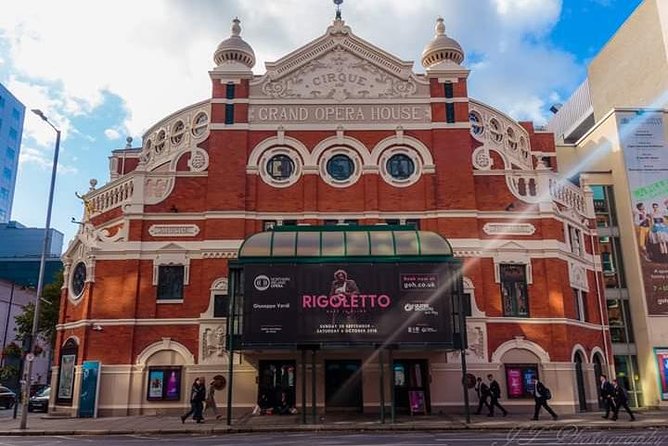
The route ends at the Crown Liquor Saloon, where admission is included and you can stop for a drink. Refurbished in 1885, the Crown is a fine example of a Victorian gin palace, with the kind of ornate interior that makes a short stop worthwhile.
The tour also includes a brief drive through BT9, one of Belfast’s more affluent addresses. The contrast with west Belfast is deliberate: grand houses, working-class streets, university districts, memorial gardens, and docklands all form part of one city.
Price, pace, and who gets the best value
At $638.11 per person, this is expensive for a three-hour city tour, especially if you are traveling alone or as a couple. The private vehicle, central hotel or cruise ship pickup, air conditioning, and dedicated guide explain part of the price, but the value improves when the cost is shared by a larger private group.
The route is useful for a first look at Belfast because it handles the driving and reaches areas that would take much longer to connect on foot. You also get a guide who can respond to questions rather than deliver a fixed group script.
Still, do not mistake quantity for depth. The schedule lists many stops, and several last only 5 to 15 minutes. You see a great deal, but you do not get a full visit inside Belfast Castle, SS Nomadic, or Titanic Belfast.
Central Belfast hotel and cruise ship pickup and drop-off are included. Airport pickup is not offered. Free cancellation is available up to 24 hours before the start time, while later cancellations and changes are not refunded.
Should you book this Belfast tour?
Book it if you want a private introduction to Belfast’s neighborhoods, political murals, Peace Walls, and major sights in a short window. It suits first-time visitors, cruise passengers with limited time, and families or small groups who value a car and direct access to a local guide.
I would be more cautious if you want museum time, long walks, or a strictly neutral academic lecture. Ask for a balanced discussion of republican and loyalist history, and treat the Titanic Quarter and Belfast Castle as orientation stops rather than complete visits.
The best reason to choose this experience is its human scale. With guides such as Barry and Joe, you can ask what the city felt like during the Troubles and how it lives with that past today. Just be ready for a fast, serious tour that covers a lot of ground.
FAQ
How long does the private Belfast tour last?
The tour lasts approximately 2 hours 40 minutes to 3 hours.
Is hotel pickup included?
Yes. Free pickup and drop-off are offered from central Belfast hotels and cruise ships.
Is airport pickup available?
No. Airport pickup and drop-off are not offered.
Is the tour private?
Yes. Only your group participates in the private activity.
What language is the tour offered in?
The tour is offered in English.
Is transportation included?
Yes. Private transportation in an air-conditioned vehicle is included.
Are admission tickets included for all attractions?
No. Admission is included at several listed stops, but Belfast Castle, SS Nomadic, and Titanic Belfast are not included.
Can I visit Titanic Belfast during the tour?
The tour provides a photo opportunity at Titanic Belfast. Admission to the museum is not included.
Does the tour visit the Peace Wall?
Yes. The tour includes Peace Wall and Peace Line stops, with an opportunity to sign your name and leave a message of peace and hope.
Can I cancel for a full refund?
Yes, if you cancel at least 24 hours before the experience start time. Cancellations or changes made less than 24 hours in advance are not refunded.
Just added in Belfast
- Belfast’s Titanic Quarter: A Self-Guided Audio Tour★ 5.0 · 6 reviews
- Falls road Murals Walking Tour with former prisoners★ 5.0 · 19 reviews
- Titanic Eastside Bike Tour★ 5.0 · 9 reviews
- The Single Cask Whiskey Experience★ 5.0 · 6 reviews
- Customisable Private Shore Excursion From Belfast Cruise Terminal★ 5.0 · 6 reviews
- Small Group Giant’s Causeway Day Tour from Belfast★ 5.0 · 11 reviews
- Belfast City Sightseeing Tour Including Titanic Museum | 6 Hours★ 4.5 · 9 reviews
- 4 Hours Private Belfast City Tours★ 5.0 · 10 reviews
Tours in Belfast, compared.
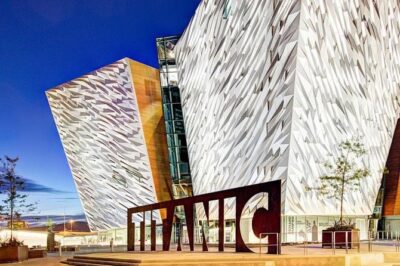
Titanic Belfast Entrance Ticket: Titanic Visitor Experience Including SS Nomadic
Read our review →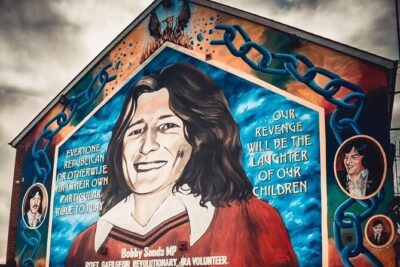
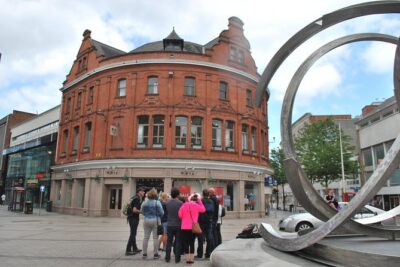
A History of Terror – Belfast City Centre Walking Tour
Read our review →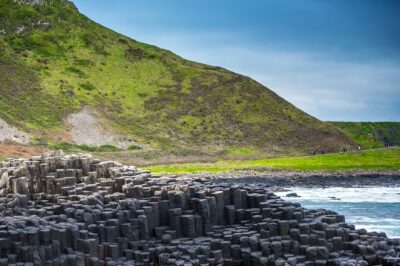
Game of Thrones and Giant’s Causeway Full-Day Tour from Belfast
Read our review →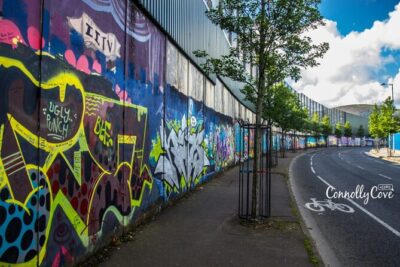
City Sightseeing Belfast Hop-On Hop-Off Bus Tour
Read our review →
Giants Causeway & Castles Tour from Belfast: Guided tour
Read our review →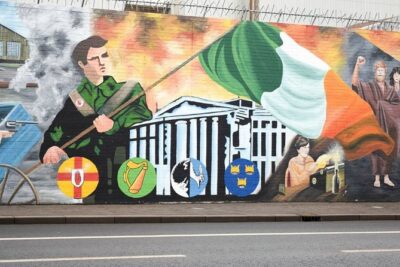
Browse the lists this tour appears in