
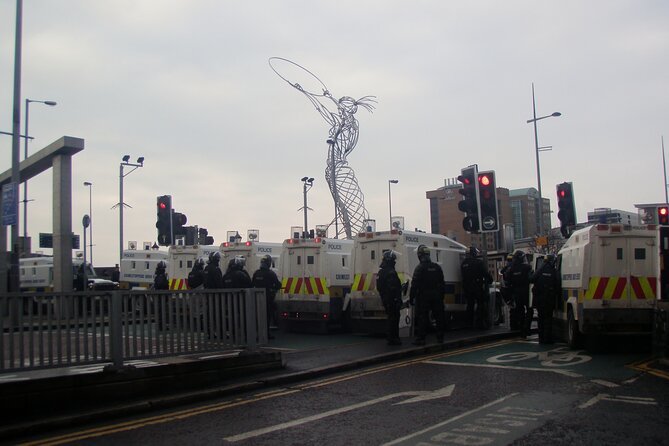
Reviewed · POLITICAL & MURAL TOURS
Belfast Troubles Murals Street Art and Peace Wall Walking Tour
Belfast’s murals are not just colorful walls. They are public records of identity, conflict, grief, loyalty, protest, and hope. This three-hour walking tour takes you from the Cathedral Quarter through Shankill Road and West Belfast, where the art becomes a guide to the city’s troubled past and its effort to build a calmer future.
I like two things here. First, you see both Loyalist and Republican areas rather than receiving only one side of Belfast’s story. Second, the small group, capped at eight, lets local guide Marti give the murals room to speak instead of rushing you from one photo stop to the next.
The main caution is pace. This is a brisk walk of more than 6 kilometers, and Marti does not use a microphone. You need comfortable shoes, reasonable fitness, and the patience to absorb a lot of information in a short time. The tour is for adults only.
Key points before you book
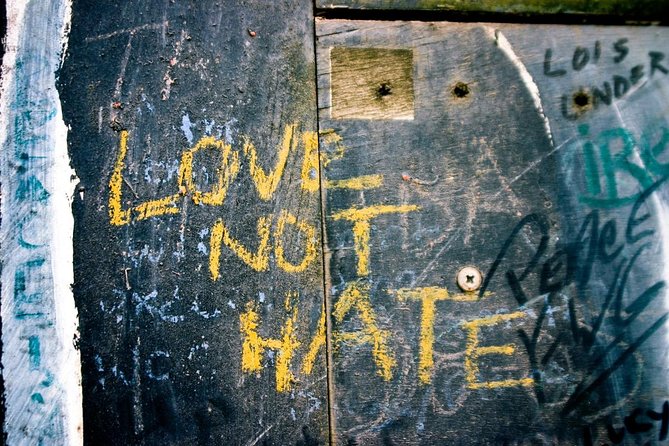
- The route covers both sides of Belfast’s political divide, including Shankill Road, Divis Street, the Peace Wall, and the Bobby Sands mural.
- Marti leads a small group of up to eight, making it easier to ask questions and stay close to the guide.
- Expect more than six kilometers of walking over roughly three hours, often at a brisk pace.
- The murals are the teaching tools, with political art, international causes, local community projects, and modern street art all included.
- This is an adult-only experience, and the subject matter can be serious and emotionally heavy.
- The tour costs $36.11 per person, a fair price if you want a broad introduction rather than a quick photo stop.
Why the murals make such good history lessons
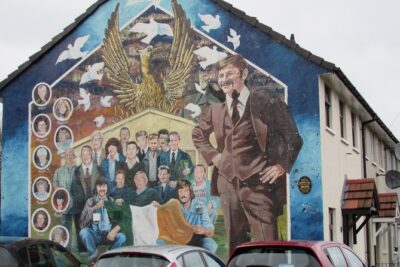
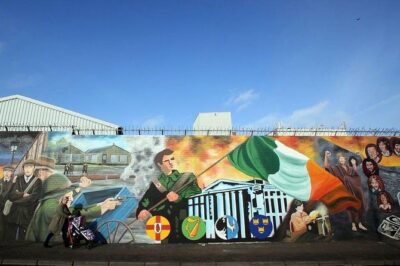
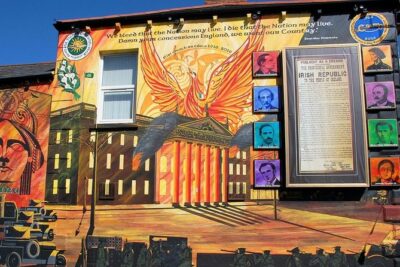
A museum can explain Belfast’s conflict with maps, dates, and display cases. Here, the evidence is painted on walls in the neighborhoods where people lived through it. The murals show how communities presented themselves, remembered losses, supported causes, and tried to shape the future.
That makes this more than a street-art walk. You will see art created by local and international artists, but the political murals are the main thread. They help Marti explain the period known as the Troubles and the wider history behind it.
The tour also gives attention to what came after violence. The re-imaging work uses murals and public art chosen by local communities. That matters because it shifts the focus from old divisions to the question of how people want their neighborhoods to be seen now.
I appreciate that balance. Belfast is not presented as a frozen conflict zone, but neither is its past brushed aside. The city is shown as a place still working through trauma, memory, and change.
More of the murals and the peace walls in Belfast:
- A History of Terror – Belfast City Centre Walking Tour
★ 5.0 · 2,883 reviews - Belfast’s Political Mural Taxi Tour
★ 5.0 · 1,180 reviews - Belfast Troubles Tour: Walls and Bridges
★ 5.0 · 853 reviews
Starting in the Cathedral Quarter
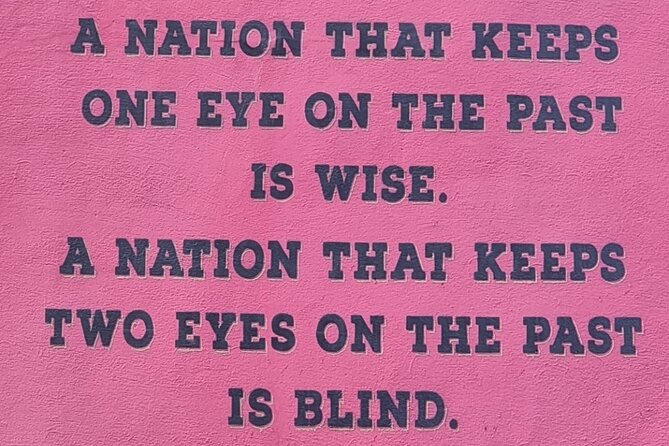
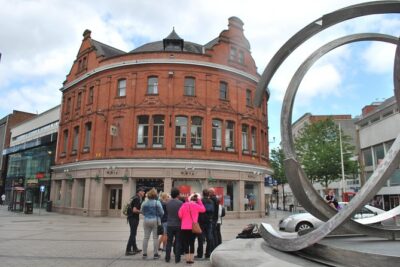
The walk begins on Exchange Street West in the Cathedral Quarter, close to the city center. This opening section introduces Belfast’s modern street-art scene, including work by international artists and newer pieces that are less directly tied to politics.
You will have time to look rather than simply walk past. That is important because street art can disappear into the background when you are trying to keep up with a guide. The first part also gives you a visual contrast: contemporary art and lively city-center walls before the route moves into areas marked more clearly by political identity.
The Cathedral Quarter is a sensible starting point for another reason. It lets Marti establish the broad story before you reach the more sensitive sites. The conflict in Northern Ireland is not a simple contest between two tidy groups, and a short introduction helps you understand why the murals can carry such different meanings.
Do not expect a polished lecture with every historical question settled. Three hours can only offer an introduction. The value comes from connecting places, images, and personal local knowledge as you walk.
Shankill Road and the Loyalist murals
The tour then reaches Shankill Road, where you view Loyalist murals and local street art. This is one of the places where the route becomes more personal and political.
The murals reflect a community identity shaped by British and Protestant traditions, remembrance, and a strong sense of belonging. Their symbols and references may not be obvious if you arrive without context. Marti’s role is to explain what you are looking at and how the art relates to the people who live in the area.
This stop is fairly short on paper, around 15 minutes, but the walking and commentary give it more weight than a quick picture stop. You may find the atmosphere more serious here than in the Cathedral Quarter. That is part of the point. The tour brings you into real neighborhoods rather than keeping you on a neat city-center circuit.
You should listen carefully to how local people are described. The best parts of this experience focus on ordinary families and communities, not only politicians and armed groups. That approach helps you see why memories of the conflict can remain powerful even after the formal violence has ended.
Divis Street and the International Mural Wall
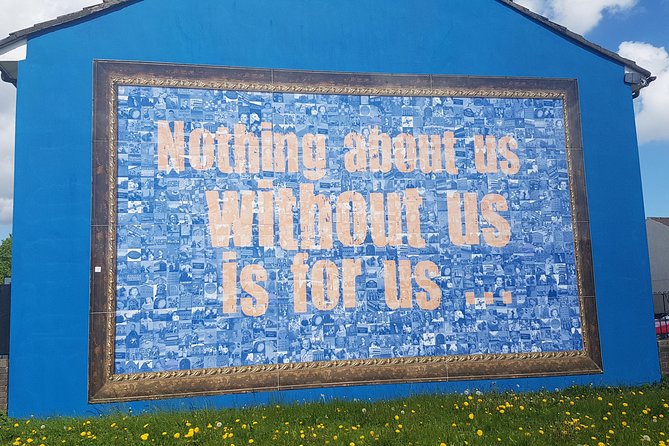
On Divis Street, the subject broadens beyond local political identity. The International Mural Wall features art connected with causes from around the world.
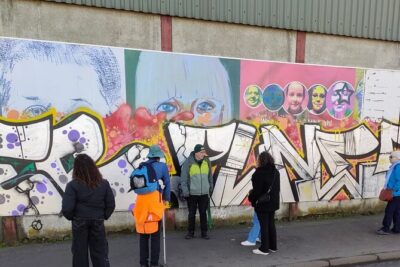
This section is useful because it shows how Belfast’s walls have become a place for solidarity as well as division. International struggles, human rights messages, and wider political themes appear beside local concerns. The murals do not all speak with one voice, and they are not meant to.
The stop lasts around 15 minutes. Take a moment to look at the change in tone between the murals here and those on Shankill Road. The route is not simply showing one wall after another. It is showing how public art can memorialize, argue, welcome, or challenge.
For me, this is one of the tour’s strongest ideas: the same medium can preserve old loyalties while also opening a door to wider causes. That tension is part of modern Belfast.
Other walks around Belfast:
- Belfast Political Tour-Conflicting Stories Walking Tour
★ 4.5 · 459 reviews - Best of Belfast Walking Tour
★ 5.0 · 399 reviews - Belfast Eclectic Walking City Center Experience, The Marti Way
★ 5.0 · 348 reviews - The Real Eclectic Belfast City Walking Tour/Experience.
★ 5.0 · 152 reviews
The Peace Wall and the meaning of separation
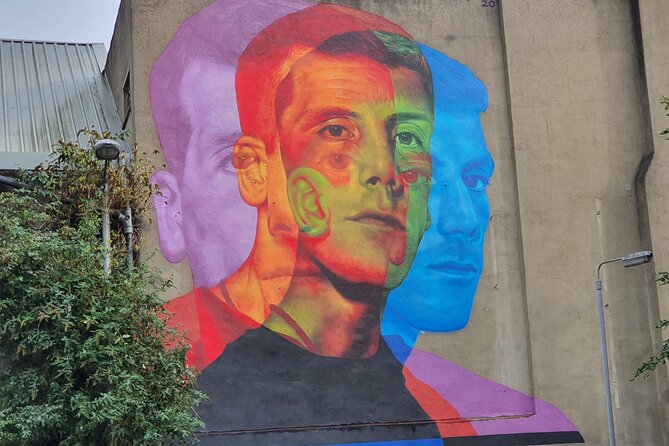
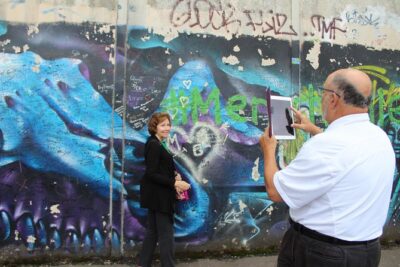
The Peace Wall is the most direct symbol on the route. It separates communities that once faced one another across a dangerous divide. Seeing it on foot gives you a more grounded sense of its scale and purpose than a passing view from a vehicle.
The wall may be called a peace wall, but it is also a reminder that peace and separation can exist together. It helped reduce violence, yet its presence shows that complete trust and integration did not arrive overnight.
The official stop is brief, around 10 minutes, so you should not expect a long visit with extensive facilities. The wall itself is the subject. The guide’s explanation gives meaning to what might otherwise be just a large barrier covered with messages and painted surfaces.
This is also where the tour’s focus on healing becomes clearest. Marti talks about the work still needed across generations. You will hear about the effort to help people understand the past without allowing it to dictate every part of the future.
The Bobby Sands mural in West Belfast
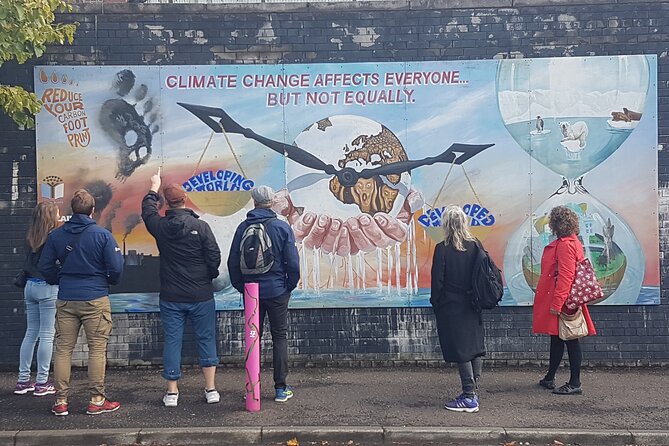
The Bobby Sands mural is one of the best-known images in Belfast’s Republican area of West Belfast. It is also the most photographed mural on this route.
Bobby Sands was a Republican prisoner who died during the 1981 hunger strike. The mural has become a major symbol of Republican memory and identity. Its importance cannot be separated from the political and emotional weight attached to Sands and the hunger strike.
This is a short stop, listed at around five minutes, but it may be one of the most memorable. You will want time for a photograph, yet the image deserves more than a quick snapshot. Listen for the explanation of how the mural is understood by those who identify with its message and why it has become known far beyond Belfast.
The route’s decision to include both Shankill Road and the Bobby Sands mural matters. You are not being shown only one community’s symbols. You are being asked to compare them and to understand how each side uses walls to tell its own story.
Street art, community projects, and a changing Belfast
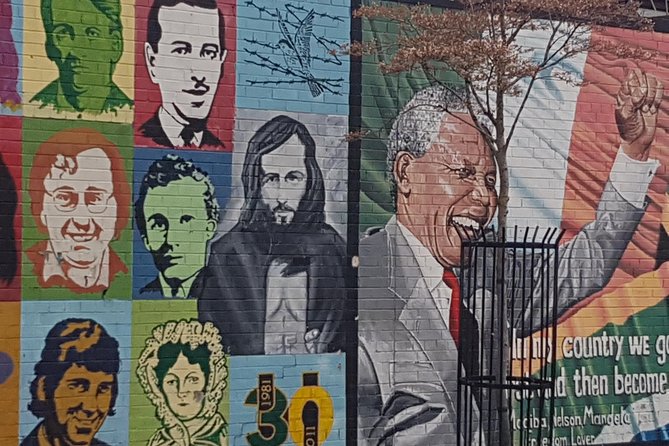
The political murals attract the most attention, but this tour does not stop there. Modern street art and community-led projects help show the Belfast of today.
The re-imaging work is especially worth noting. Instead of treating every mural as a permanent monument to the past, these projects allow local communities to choose art they want to share. That gives the walls a more hopeful purpose, although it does not erase the older images.
You will also pass more street art and political murals after the main stops, on the way back toward the city center. This makes the route feel like a connected walk through Belfast rather than five isolated attractions.
The tour finishes near Kelly’s Cellars on Bank Street. You can end there or continue a short distance toward City Hall and 2 Royal Avenue, a local community center. That central finish is useful if you want to continue sightseeing, find lunch, or think over what you have seen before moving on.
Marti’s guiding style and the amount of information
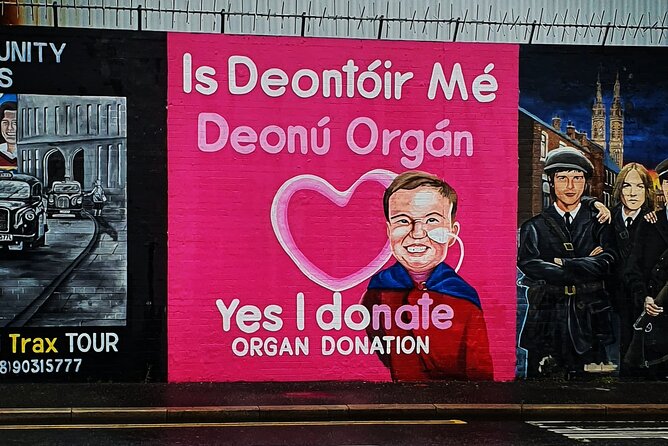
Marti is a local guide with a strong personal connection to Belfast. He tells the story with conviction and covers much more than the events of the last 60 years. You may hear background reaching far back into the history of Ireland and Northern Ireland before the tour returns to the Troubles and the present day.
That breadth can be a strength if you want context. It can also feel like a lot. Several parts of the experience depend on listening while walking, and Marti speaks without a microphone. Stay close and do not drift behind the group.
His style is direct and sometimes challenging. He may ask what you already know about a subject before explaining it. Some people will find that engaging, while others may prefer a quieter, more conversational approach. If you ask questions, be prepared for a guide who has firm views and strong personal experience, even though the route aims to present both communities.
The most useful way to approach the tour is to treat it as a focused introduction, not a final word on Northern Ireland. Marti can give you a framework, but the subject is too complicated to settle in one afternoon.
How demanding is the three-hour walk?
The route takes roughly 2.5 to 3 hours, and one account of the walk measured more than 6 kilometers. That is a significant distance for a tour built around listening and looking.
Wear proper walking shoes. You need to keep pace, especially because there is no microphone and the guide may be speaking while the group is moving. The route is near public transport, but you should not plan it as a gentle, short stroll.
No special health restrictions are listed, but a moderate level of physical fitness is expected. Weather is another factor. Belfast can be wet and cooler than you expect, so bring suitable clothing. Sunglasses may be useful on bright days, and sun cream makes sense in summer.
The adult-only rule is important. The material concerns political violence, death, imprisonment, community division, and continuing trauma. This is not a light street-art outing for children.
Is $36.11 good value?
At $36.11 per person, this tour is priced reasonably for a small-group, three-hour experience with a local guide. You are paying for interpretation and access to several areas of Belfast, not entry to a museum or a collection of ticketed attractions.
There are no major admission fees built into the route. The Peace Wall is viewed from the outside, and the other stops are public places. That means the value depends almost entirely on the guide’s explanations and the route itself.
I think the price works best for a first visit to Belfast. In one outing, you see modern street art, Loyalist murals, Republican murals, the International Mural Wall, and the Peace Wall. You also gain practical orientation to areas you might not choose to explore alone.
If you only want photographs, you can see some murals independently for less money. If you want the stories, context, and a local voice, the fee is easier to justify.
Who should book this experience?
Book it if you want to understand how Belfast’s public art connects to community identity and the peace process. It suits adults who enjoy serious subjects, local stories, and walking through neighborhoods rather than viewing everything from a coach.
It is also a good choice if you want a balanced route. You will not see only Republican or only Loyalist imagery. The walk makes room for both communities, international causes, newer street art, and the work of healing.
Think twice if you dislike long walks, large amounts of spoken information, or a guide with a forceful style. You may also prefer another format if you want a polished museum presentation or more time at each individual mural.
Free cancellation is available up to 24 hours before the start time. After that, the amount paid is not refunded, so plan carefully if the weather forecast looks poor.
Should you book the Belfast murals and Peace Wall walk?
I would book this tour if Belfast’s past is one of your main reasons for visiting and you want to see the city on foot. The strongest features are the small group, the coverage of both communities, the variety of mural styles, and the attention given to Belfast’s future as well as its conflict.
Go prepared. Wear good shoes, dress for rain and cold, stay near Marti, and expect a serious three hours with plenty of information. If that sounds like your kind of afternoon, the tour offers a thoughtful way to see Belfast’s walls as living parts of the city rather than simple backdrops for photographs.
FAQ
How long does the Belfast murals and Peace Wall tour last?
The walk lasts approximately 2.5 to 3 hours.
How much does the tour cost?
The listed price is $36.11 per person.
Where does the tour begin?
The tour begins at Exchange Street West, Belfast BT1, in the Cathedral Quarter area.
Where does the tour finish?
The stated finish is at 32 Bank Street, near Kelly’s Cellars. You can also continue a short walk toward City Hall and 2 Royal Avenue.
What places are included on the route?
The route includes the Cathedral Quarter, Shankill Road, the International Mural Wall on Divis Street, the Peace Wall, and the Bobby Sands mural.
Is the tour suitable for children?
No. This is an adults-only activity and is not suitable for anyone under 18.
How far do you walk?
The tour requires a moderate level of fitness, and the route can cover more than 6 kilometers in three hours. Comfortable walking shoes are strongly advised.
More Street Art in Belfast
- Belfast Music and Street Art Small Group Guided Experience
★ 4.5 · 62 reviews
Just added in Belfast
- Belfast Black Cab Taxi Private Tour 2hr with Original Guides★ 5.0 · 10 reviews
- Luxury Party Bike Tour of Belfast City (Individual Seat)★ 4.5 · 21 reviews
- The Hippy Bike Fully Enclosed Party Bike Tour (Private Bike)★ 5.0 · 18 reviews
- Belfast Political & Murals Tour★ 5.0 · 51 reviews
- Private Tour: ‘Game of Thrones’ and Giant’s Causeway Full-Day Tour from Belfast★ 4.5 · 52 reviews
- Award Winning Express 2 Hours Belfast Black Taxi/Cab tours★ 5.0 · 35 reviews
- Private Tour: Giant’s Causeway, Norman Castles, and Game of Thrones Film Locations★ 5.0 · 70 reviews
- Belfast Titanic Museum and Sighseeing Tour★ 4.5 · 59 reviews
Political & Mural Tours, compared.
A History of Terror – Belfast City Centre Walking Tour
Read our review →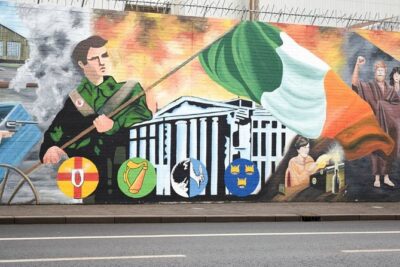
2 Hour Private Belfast Taxi Cab Tour of Troubles & Peace walls
Read our review →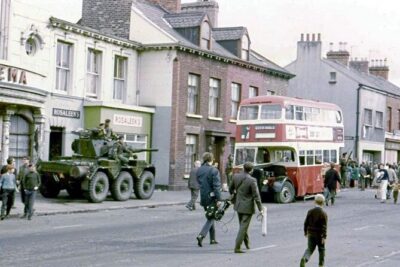
2 hours Belfast Original Drivers The Troubles Black Taxi Tour
Read our review →Browse the lists this tour appears in